
When I talk about #GameFi token economies today, one concept I always return to is token velocity how quickly a token moves through the hands of players, sinks, and markets. And if there’s one organization that has consistently influenced this cycle across multiple games, it’s @Yield Guild Games . YGG is not just participating in these economies it’s actively shaping how tokens circulate, stabilize, and retain long-term value inside virtual worlds.
From the outside people often assume a guild simply increases sell pressure because scholars earn tokens and eventually convert them. But the closer I have worked within the YGG ecosystem, the more I have seen the opposite. YGG doesn't accelerate reckless velocity it directs it, reshaping it from a chaotic flow into a structured economic rhythm. And this subtle distinction has made a massive difference in the health of the games YGG touches.
When YGG onboards players, it rarely looks like traditional farming behavior. Scholars aren’t rushing in to squeeze value from a game. They are trained, educated, and supported with context understanding the purpose of sinks, upgrade loops, reinvestment opportunities, and why sustainable gameplay matters more than short-term extraction. This shifts the behavioral pattern of token circulation in a meaningful way. Instead of immediate liquidation, a significant portion of scholars reinvest within the ecosystem crafting, upgrading, staking, or participating in game events that loop tokens back into sinks. I think this is where YGG’s influence becomes clearly visible.
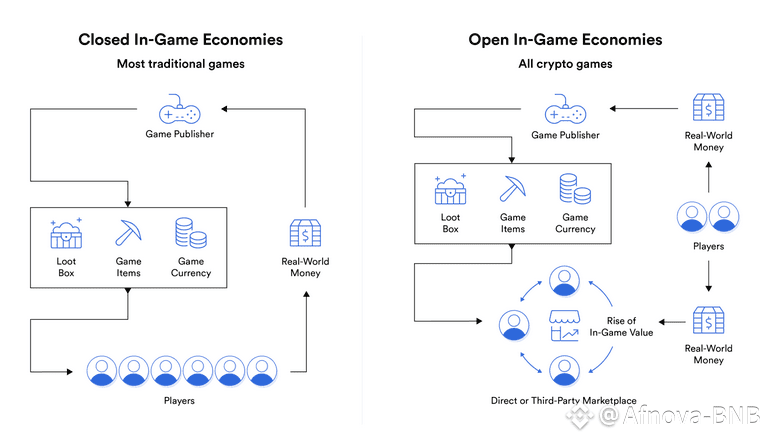
As a guild operating at scale, YGG shapes the ratio between token creation and token absorption. When players are encouraged to reinvest rather than extract, velocity stays active within the game instead of spilling into the secondary market. Healthy velocity means tokens keep moving through useful gameplay loops, while unhealthy velocity is when tokens rush straight toward exchanges. YGG’s structured onboarding pushes the balance toward the former.
I have seen firsthand how this changes game dynamics. Economies that risk entering inflationary cycles find new stability because their active user base isn’t behaving like yield farmers they are acting like invested participants. Developers often underestimate how much a large group of aligned players can influence liquidity cycles. YGG provides that alignment at scale.
The other key aspect is education. YGG constantly teaches players that tokens are not merely earnings; they’re tools. Tools to progress, tools to compete, tools to strengthen the guild and the game itself. When scholars treat tokens this way, the entire network benefits. Games see stronger retention, developers see more predictable economic patterns, and players enjoy longer lifecycles without burnout.
This is why I see YGG as an economic stabilizer, not an extractor. By encouraging thoughtful circulation, the guild helps prevent the two extremes that ruin token economies velocity that’s too high, creating hyperinflation, and velocity that’s too low, causing stagnation. YGG keeps the flow dynamic, useful, and value-creating.
I think the most overlooked contribution is the feedback loop YGG creates with developers. Because the guild observes token movement at a community level, it becomes a valuable source of insight for game teams: Which sinks are effective? Which incentives are misaligned? Which behaviors suggest economic overheating? Developers rarely get this level of grassroots economic data. YGG has become the bridge that communicates what players feel, what the economy demands, and what the game needs to refine before it spirals.
To me YGG’s impact on token velocity isn’t theoretical it’s visible in healthier economies, smarter players, and games that last longer because their token systems were shaped with real human behavior in mind. Token velocity is the heartbeat of every Web3 game, and YGG is one of the few organizations that knows how to keep that heartbeat steady.
