
#data
data
695,053 مشاهدات
2,046 يقومون بالنقاش
رائج
جديد

عرض الترجمة
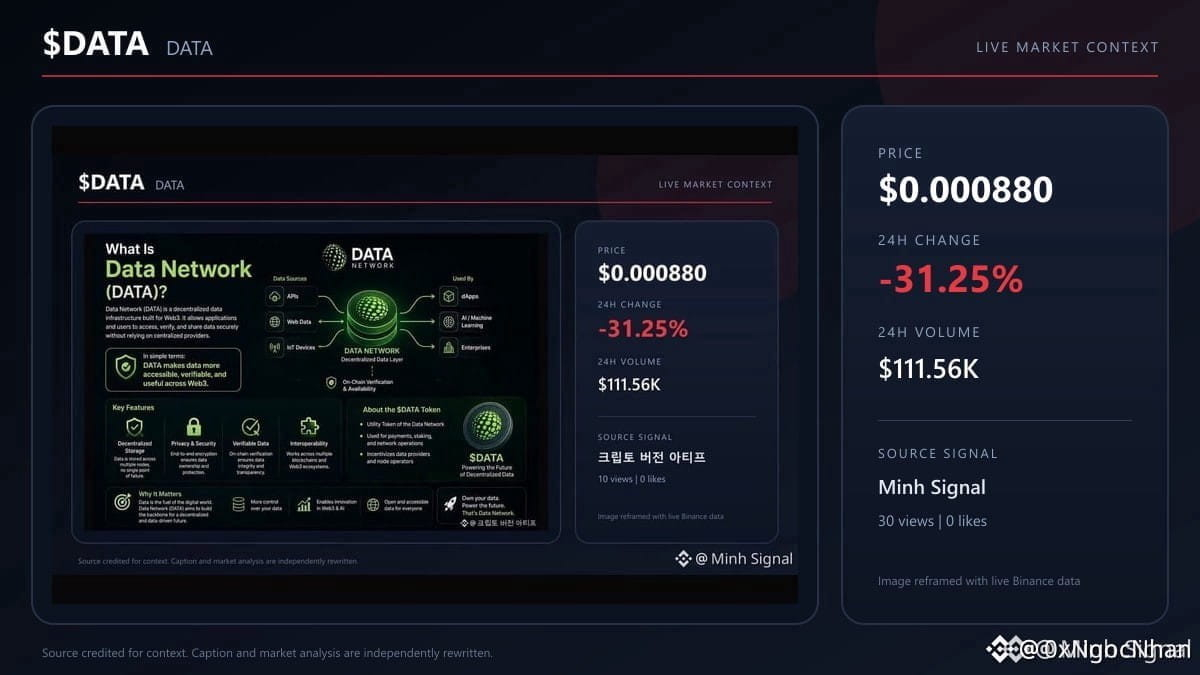
$DATA is seeing a sharp 31.25% pullback amid $0.11M in volume.
The current price of $0.000880 highlights a period of intense volatility. Traders are now watching for signs of base formation rather than immediate recovery.
**Trader Checklist:**
* **Bullish Trigger:** Watch for a stabilization in daily volume accompanied by a sustained move above recent local resistance.
* **Risk/Invalidation:** Failure to hold current support levels could signal further downside pressure, requiring a re-evaluation of the trend.
Are you treating this move as a healthy reset or a sign of deeper structural weakness?
Check the live chart here: DATA 📉
Tap $DATA for the live chart. #DATA #BinanceSquare
The current price of $0.000880 highlights a period of intense volatility. Traders are now watching for signs of base formation rather than immediate recovery.
**Trader Checklist:**
* **Bullish Trigger:** Watch for a stabilization in daily volume accompanied by a sustained move above recent local resistance.
* **Risk/Invalidation:** Failure to hold current support levels could signal further downside pressure, requiring a re-evaluation of the trend.
Are you treating this move as a healthy reset or a sign of deeper structural weakness?
Check the live chart here: DATA 📉
Tap $DATA for the live chart. #DATA #BinanceSquare
$DATA يعيد الضبط حاليًا بعد هبوط يومي حاد بنسبة 31.25%.
مع حجم تداول يبلغ $0.11M، يبحث الأصل عن قاع مستقر عند $0.000880. لا تزال الزخمية مضغوطة، ما يجعل الصبر ضروريًا للمشاركين الذين يراقبون الشارت.
يتطلب التحول الصعودي ضغط شراء مستمرًا لاستعادة الأرض المفقودة، بينما قد يشير عدم القدرة على الحفاظ على المستويات الحالية إلى المزيد من تأكيد التراجع للأسفل. يعد التحكم في المخاطر أمرًا بالغ الأهمية عندما ترتفع التقلبات وتكون السيولة ضعيفة.
هل تعتبر هذا التراجع منطقة محتملة للاستقرار أم أنك تنتظر تأكيدًا أوضح على حدوث انعكاس؟
حلّل شارت DATA المباشر على Binance لمتابعة…
اضغط على $DATA لعرض الشارت المباشر. #DATA #BinanceSquare
مع حجم تداول يبلغ $0.11M، يبحث الأصل عن قاع مستقر عند $0.000880. لا تزال الزخمية مضغوطة، ما يجعل الصبر ضروريًا للمشاركين الذين يراقبون الشارت.
يتطلب التحول الصعودي ضغط شراء مستمرًا لاستعادة الأرض المفقودة، بينما قد يشير عدم القدرة على الحفاظ على المستويات الحالية إلى المزيد من تأكيد التراجع للأسفل. يعد التحكم في المخاطر أمرًا بالغ الأهمية عندما ترتفع التقلبات وتكون السيولة ضعيفة.
هل تعتبر هذا التراجع منطقة محتملة للاستقرار أم أنك تنتظر تأكيدًا أوضح على حدوث انعكاس؟
حلّل شارت DATA المباشر على Binance لمتابعة…
اضغط على $DATA لعرض الشارت المباشر. #DATA #BinanceSquare
هل يعثر $DATA على قاع بعد تصحيح 31.25% اليوم؟
يقوم المشاركون في السوق حالياً بتقييم تأثير الانخفاض الأخير في حجم التداول إلى $0.11M، ما يشير إلى تراجع الاهتمام خلال مرحلة التماسك هذه.
* **الاستقرار:** قد يؤدي الثبات فوق مستوى $0.000880 إلى إعادة اختبار قمم النطاق السابقة إذا بدأ حجم التداول في التعافي.
* **الإبطال:** قد يشير الانهيار المستمر تحت المستويات الحالية إلى مزيد من الضغط السلبي، ما يستدعي اتباع نهج حذر لإدارة المخاطر.
* **التوقعات:** نراقب حدوث تحول في الزخم للتأكد مما إذا كان هذا التراجع يمثل قاعاً بنيوياً أو استمراراً لـ…
اضغط على $DATA لعرض المخطط المباشر. #DATA #BinanceSquare
يقوم المشاركون في السوق حالياً بتقييم تأثير الانخفاض الأخير في حجم التداول إلى $0.11M، ما يشير إلى تراجع الاهتمام خلال مرحلة التماسك هذه.
* **الاستقرار:** قد يؤدي الثبات فوق مستوى $0.000880 إلى إعادة اختبار قمم النطاق السابقة إذا بدأ حجم التداول في التعافي.
* **الإبطال:** قد يشير الانهيار المستمر تحت المستويات الحالية إلى مزيد من الضغط السلبي، ما يستدعي اتباع نهج حذر لإدارة المخاطر.
* **التوقعات:** نراقب حدوث تحول في الزخم للتأكد مما إذا كان هذا التراجع يمثل قاعاً بنيوياً أو استمراراً لـ…
اضغط على $DATA لعرض المخطط المباشر. #DATA #BinanceSquare
$DATA يشهد اليوم تصحيحًا حادًا بنسبة 31.25%.
وبحجم تداول يبلغ $0.11M، تتمثل الأولوية الفورية في تثبيت السعر بدلًا من حدوث انعكاس سريع. إليك قائمة التحقق الحالية للمتداول:
* **شرط صعودي:** راقب تشكّل نمط تَوحُّد/تجميع، بما يشير إلى وجود اهتمام بالشراء قرب أدنى الأسعار الحالية.
* **الإبطال (Invalidation):** قد يؤدي عدم القدرة على الحفاظ على مستوى الدعم الحالي إلى مزيد من الضغوط الهبوطية.
يتم تسعير الرمز حاليًا عند $0.000880. ومع استمرار التذبذب المرتفع، يلزم التحلي بالصبر لمعرفة ما إذا كان المشترون سيتدخلون لامتصاص السيولة البيعية الأخيرة.
هل تعتبر هذا التراجع فرصة للتجميع أم أنك تنتظر…
اضغط على $DATA لعرض المخطط الحي. #DATA #BinanceSquare
وبحجم تداول يبلغ $0.11M، تتمثل الأولوية الفورية في تثبيت السعر بدلًا من حدوث انعكاس سريع. إليك قائمة التحقق الحالية للمتداول:
* **شرط صعودي:** راقب تشكّل نمط تَوحُّد/تجميع، بما يشير إلى وجود اهتمام بالشراء قرب أدنى الأسعار الحالية.
* **الإبطال (Invalidation):** قد يؤدي عدم القدرة على الحفاظ على مستوى الدعم الحالي إلى مزيد من الضغوط الهبوطية.
يتم تسعير الرمز حاليًا عند $0.000880. ومع استمرار التذبذب المرتفع، يلزم التحلي بالصبر لمعرفة ما إذا كان المشترون سيتدخلون لامتصاص السيولة البيعية الأخيرة.
هل تعتبر هذا التراجع فرصة للتجميع أم أنك تنتظر…
اضغط على $DATA لعرض المخطط الحي. #DATA #BinanceSquare

لقد أمضينا سنوات في بناء سلاسل الكتل التي يمكنها نقل الأموال دون وسطاء.
والآن نحن نضع #stocks ، والصناديق، والخزائن، والعملات المستقرة، وكل أنواع الأصول الأخرى على السلسلة.
لكن هناك مشكلة لا نتحدث عنها بما يكفي:
لا يزال #blockchain بحاجة إلى معرفة قيمة تلك الأصول.
و"استخدام سعر السوق فقط" لا ينجح دائمًا.
ماذا لو كان الأصل يُتداول بضعف؟
ماذا لو جاءت قيمته من الاحتياطيات؟
ماذا لو كان يمثل خزنة؟
ماذا لو كانت السوق الأساسية مغلقة لكن الرمز المميز يواصل التداول على السلسلة؟
ماذا لو كانت هناك عدة أسواق تعرض أسعارًا مختلفة؟
عند هذه النقطة، لا تكون المهمة مجرد العثور على رقم.
بل فهم لماذا ينبغي استخدام ذلك الرقم.
وهذا أحد الأسباب التي جعلتني أولي اهتمامًا أكبر بما يفعله $DIA فيما يتعلق بالبيانات الأساسية وبيانات القيمة العادلة. لقد كانت DIA تبني موجزات للأصول التي قد لا يروي فيها سعر السوق القصة كاملة، بما في ذلك الأصول المدعومة بالاحتياطيات والأصول القائمة على الخزائن.
المرحلة التالية لـ #crypto لن تكون فقط حول وضع المزيد من الأصول على السلسلة.
بل ستكون حول منح العقود الذكية ما يكفي من السياق لفهم تلك الأصول فعليًا.
ذلك #data الطبقة ستصبح مهمة.
والآن نحن نضع #stocks ، والصناديق، والخزائن، والعملات المستقرة، وكل أنواع الأصول الأخرى على السلسلة.
لكن هناك مشكلة لا نتحدث عنها بما يكفي:
لا يزال #blockchain بحاجة إلى معرفة قيمة تلك الأصول.
و"استخدام سعر السوق فقط" لا ينجح دائمًا.
ماذا لو كان الأصل يُتداول بضعف؟
ماذا لو جاءت قيمته من الاحتياطيات؟
ماذا لو كان يمثل خزنة؟
ماذا لو كانت السوق الأساسية مغلقة لكن الرمز المميز يواصل التداول على السلسلة؟
ماذا لو كانت هناك عدة أسواق تعرض أسعارًا مختلفة؟
عند هذه النقطة، لا تكون المهمة مجرد العثور على رقم.
بل فهم لماذا ينبغي استخدام ذلك الرقم.
وهذا أحد الأسباب التي جعلتني أولي اهتمامًا أكبر بما يفعله $DIA فيما يتعلق بالبيانات الأساسية وبيانات القيمة العادلة. لقد كانت DIA تبني موجزات للأصول التي قد لا يروي فيها سعر السوق القصة كاملة، بما في ذلك الأصول المدعومة بالاحتياطيات والأصول القائمة على الخزائن.
المرحلة التالية لـ #crypto لن تكون فقط حول وضع المزيد من الأصول على السلسلة.
بل ستكون حول منح العقود الذكية ما يكفي من السياق لفهم تلك الأصول فعليًا.
ذلك #data الطبقة ستصبح مهمة.


🚨 إعادة تسمية $DATA هي عبارة عن إعادة ضبط كلاسيكية للتقلبات بانتظار أن تنفجر! 💥
خطة إعادة التسمية الكلاسيكية تتكشف الآن حيث يتحول $IP إلى $DATA بنسبة 1:1. 📊 بينما عادةً ما تُبعد الرسوم البيانية المتعبة المستثمرين الأفراد، يعرف المتداولون المخضرمون أن سردًا جديدًا يعيد ضبط المعنويات ويُزيل ضغط البيع القديم، ويُشعل تدفق أوامر قويًا على المدى القصير.
التقلبات هي المكان الذي تعيش فيه السيولة الحقيقية. ⚡ بمجرد استقرار عملية الانتقال، عادةً ما تتحرك موجة التوسع الأولية بسرعة عالية، مما يكافئ من يضع أوامره مبكرًا بدل التردد في الهامش.
💡 رأس المال الذكي يبقى مركزًا على التقاط أقوى اندفاعة زخم فور انطلاقها مباشرة. 💬 هل أنت في الطليعة قبل هذا الدفع بعد الانتقال، أم تنتظر تأكيدًا على الرسوم البيانية؟ 👇
⚠️ ليست نصيحة مالية. دائمًا أدِر مخاطرك. 🛡️
🏷️ #DATA #IP #Altcoins #CryptoTrading #Breakout
🔥 💎
خطة إعادة التسمية الكلاسيكية تتكشف الآن حيث يتحول $IP إلى $DATA بنسبة 1:1. 📊 بينما عادةً ما تُبعد الرسوم البيانية المتعبة المستثمرين الأفراد، يعرف المتداولون المخضرمون أن سردًا جديدًا يعيد ضبط المعنويات ويُزيل ضغط البيع القديم، ويُشعل تدفق أوامر قويًا على المدى القصير.
التقلبات هي المكان الذي تعيش فيه السيولة الحقيقية. ⚡ بمجرد استقرار عملية الانتقال، عادةً ما تتحرك موجة التوسع الأولية بسرعة عالية، مما يكافئ من يضع أوامره مبكرًا بدل التردد في الهامش.
💡 رأس المال الذكي يبقى مركزًا على التقاط أقوى اندفاعة زخم فور انطلاقها مباشرة. 💬 هل أنت في الطليعة قبل هذا الدفع بعد الانتقال، أم تنتظر تأكيدًا على الرسوم البيانية؟ 👇
⚠️ ليست نصيحة مالية. دائمًا أدِر مخاطرك. 🛡️
🏷️ #DATA #IP #Altcoins #CryptoTrading #Breakout
🔥 💎

يخضع $DATA لتصحيح حاد بنسبة 31.25% على حجم تداول قدره $0.11M.
يختبر الأصل حاليًا قدرته على إيجاد قاع بعد جلسة تقلبات استمرت 24 ساعة. يتطلب سيناريو الاستقرار الصعودي استعادة الزخم المحلي للإشارة إلى إنهاك ضغط البيع الحالي. وعلى العكس، فإن الفشل في التماسك عند مستويات الدعم الحالية قد يدعو إلى مزيد من التقلبات الهبوطية.
يراقب المتداولون DATA بحثًا عن علامات على تكوّن قاعدة مدعومة بالحجم قبل التفكير في أي تحولات في الاتجاه. وسيكون العامل الحاسم هو كيفية استجابة السعر لاختبار السيولة الفوري هذا.
كيف تقوم بتعديل معايير المخاطرة لديك خلال هذا التراجع في DATA؟
تحقق…
اضغط على $DATA لعرض الرسم البياني المباشر. #DATA #BinanceSquare
يختبر الأصل حاليًا قدرته على إيجاد قاع بعد جلسة تقلبات استمرت 24 ساعة. يتطلب سيناريو الاستقرار الصعودي استعادة الزخم المحلي للإشارة إلى إنهاك ضغط البيع الحالي. وعلى العكس، فإن الفشل في التماسك عند مستويات الدعم الحالية قد يدعو إلى مزيد من التقلبات الهبوطية.
يراقب المتداولون DATA بحثًا عن علامات على تكوّن قاعدة مدعومة بالحجم قبل التفكير في أي تحولات في الاتجاه. وسيكون العامل الحاسم هو كيفية استجابة السعر لاختبار السيولة الفوري هذا.
كيف تقوم بتعديل معايير المخاطرة لديك خلال هذا التراجع في DATA؟
تحقق…
اضغط على $DATA لعرض الرسم البياني المباشر. #DATA #BinanceSquare

$DATA تواجه تصحيحًا حادًا بنسبة 31.25%، بينما يبلغ حجم التداول $0.11M.
تتطلب هذه التقلبات نظرة منضبطة بهدف تحقيق الاستقرار. حاليًا يتم التداول عند $0.000880، ويتابع المشاركون في السوق تكوين أرضية للتجميع قبل السعي إلى انعكاس صعودي.
من المرجح أن يستلزم تعافي DATA استعادة مستمرة للزخم قصير الأجل، بينما قد يشير الفشل في الحفاظ على البنية الحالية إلى مخاطر هبوط إضافية. يراقب المتداولون ما إذا كان تقلص السيولة الحالي يمثل قاعًا أم مجرد توقف في الاتجاه السائد.
كيف تقوم بتعديل إدارة المخاطر لديك خلال هذه الفترة ذات التقلبات المرتفعة؟
تحقق من الرسم البياني المباشر الخاص بـ DATA…
اضغط على $DATA لعرض الرسم البياني المباشر. #DATA #BinanceSquare
تتطلب هذه التقلبات نظرة منضبطة بهدف تحقيق الاستقرار. حاليًا يتم التداول عند $0.000880، ويتابع المشاركون في السوق تكوين أرضية للتجميع قبل السعي إلى انعكاس صعودي.
من المرجح أن يستلزم تعافي DATA استعادة مستمرة للزخم قصير الأجل، بينما قد يشير الفشل في الحفاظ على البنية الحالية إلى مخاطر هبوط إضافية. يراقب المتداولون ما إذا كان تقلص السيولة الحالي يمثل قاعًا أم مجرد توقف في الاتجاه السائد.
كيف تقوم بتعديل إدارة المخاطر لديك خلال هذه الفترة ذات التقلبات المرتفعة؟
تحقق من الرسم البياني المباشر الخاص بـ DATA…
اضغط على $DATA لعرض الرسم البياني المباشر. #DATA #BinanceSquare
شركة ناشئة لتدريب الذكاء الاصطناعي أصبحت أسرع يونيكورن لدى Y Combinator على الإطلاق
قفزت قيمة Afterquery بأكثر من عشرة أضعاف خلال خمسة أشهر، مما جعلها أسرع يونيكورن لدى Y Combinator على الإطلاق. $DATA #DATA
قفزت قيمة Afterquery بأكثر من عشرة أضعاف خلال خمسة أشهر، مما جعلها أسرع يونيكورن لدى Y Combinator على الإطلاق. $DATA #DATA

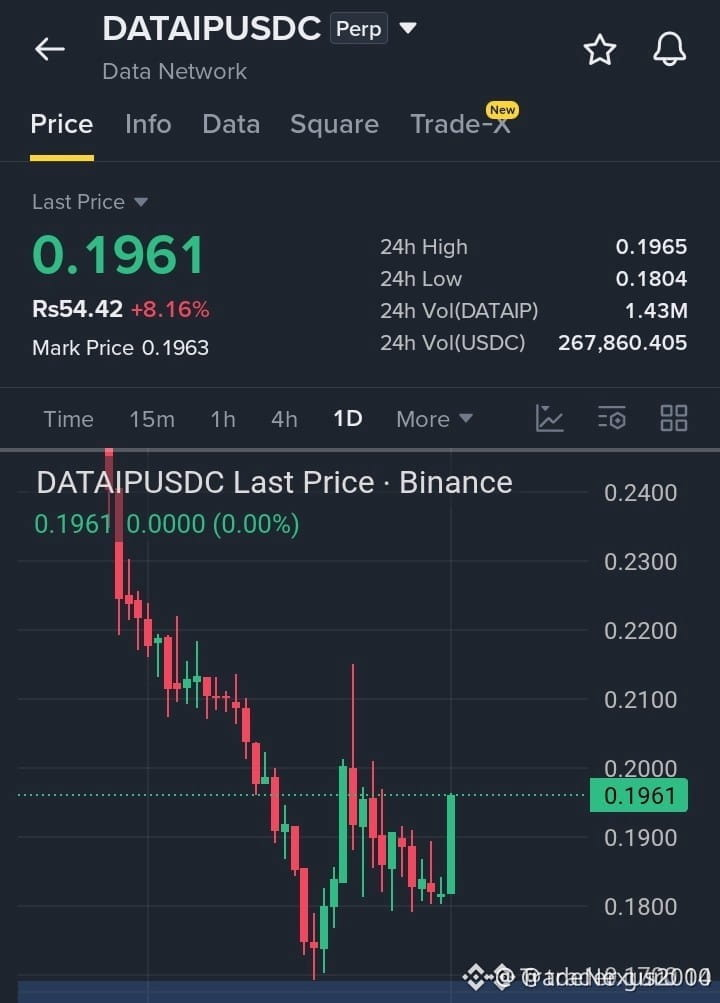
🚨 تشكّل اختراق (Data Breakout) يستعد لمسح أهداف سيولة أعلى! ⚡
الدخول: 0.1965 - 0.1970 ⚡
الهدف: 0.2000 - 0.2100 🚀
وقف الخسارة: 0.1920 ⚠️
📌 تدفّق أوامر المؤسسات يتقلّص بإحكام تحت مقاومة القمة، مُمهّدًا لمرحلة توسّع عالية الاحتمال. 🔍 انتظار ثبات مؤكد فوق 0.1965 يضمن أننا نواكب زخم “المال الذكي” بدلًا من الدخول قبل تأكيد البنية.
🌊 الإبطال يقع بدقة تحت 0.1920 للحماية من “مطاردات السيولة”، ما يوفّر نسبة مخاطرة إلى عائد نظيفة باتجاه حدود العرض العليا. 📊 بمجرد أن يُفعّل الاختراق، توقّع إعادة تسعير سريعة إلى أوجه القصور/اللافعالية عند مناطق المقاومة إلى جانب أزواج الماكرو مثل $ARB . 💬 هل تنتظر إغلاق الشمعة المؤكد أم تدخل مبكرًا أثناء إعادة الاختبار (retest)? 👇
⚠️ ليس نصيحة مالية. دائمًا أدِر مخاطرك. 🛡️
🏷️ #DATA #LongSetup #Breakout #Altcoins #Crypto
🔥 💎
الدخول: 0.1965 - 0.1970 ⚡
الهدف: 0.2000 - 0.2100 🚀
وقف الخسارة: 0.1920 ⚠️
📌 تدفّق أوامر المؤسسات يتقلّص بإحكام تحت مقاومة القمة، مُمهّدًا لمرحلة توسّع عالية الاحتمال. 🔍 انتظار ثبات مؤكد فوق 0.1965 يضمن أننا نواكب زخم “المال الذكي” بدلًا من الدخول قبل تأكيد البنية.
🌊 الإبطال يقع بدقة تحت 0.1920 للحماية من “مطاردات السيولة”، ما يوفّر نسبة مخاطرة إلى عائد نظيفة باتجاه حدود العرض العليا. 📊 بمجرد أن يُفعّل الاختراق، توقّع إعادة تسعير سريعة إلى أوجه القصور/اللافعالية عند مناطق المقاومة إلى جانب أزواج الماكرو مثل $ARB . 💬 هل تنتظر إغلاق الشمعة المؤكد أم تدخل مبكرًا أثناء إعادة الاختبار (retest)? 👇
⚠️ ليس نصيحة مالية. دائمًا أدِر مخاطرك. 🛡️
🏷️ #DATA #LongSetup #Breakout #Altcoins #Crypto
🔥 💎
هل $DATA ستجد قاعًا بعد تصحيح 31.25% اليوم؟
تقف السيولة عند $0.11M بينما تختبر الأسعار مستوى $0.000880. إليك كيفية متابعة الاستقرار:
* **السيناريو الصعودي:** يمكن أن يشير استردادٌ مستمر لمستويات السيولة المحلية إلى مرحلة محتملة من بناء قاعدة لـ DATA.
* **الإبطال:** إذا فشل $0.000880 في الحفاظ على مستوى الدعم، تبقى مخاطر استمرار تذبذب هبوطي إضافي يجب مراقبته.
* **سياق السوق:** غالبًا ما تسبق التقلبات العالية مع حجم تداول منخفض فترة من التماسك/الاستقرار.
هل ترى هذا التراجع كإعادة ضبط بنيوية أم كإشارة إلى ضعف الزخم؟
اضغط على DATA لعرض الرسم البياني المباشر
اضغط على $DATA لعرض الرسم البياني المباشر. #DATA #BinanceSquare
تقف السيولة عند $0.11M بينما تختبر الأسعار مستوى $0.000880. إليك كيفية متابعة الاستقرار:
* **السيناريو الصعودي:** يمكن أن يشير استردادٌ مستمر لمستويات السيولة المحلية إلى مرحلة محتملة من بناء قاعدة لـ DATA.
* **الإبطال:** إذا فشل $0.000880 في الحفاظ على مستوى الدعم، تبقى مخاطر استمرار تذبذب هبوطي إضافي يجب مراقبته.
* **سياق السوق:** غالبًا ما تسبق التقلبات العالية مع حجم تداول منخفض فترة من التماسك/الاستقرار.
هل ترى هذا التراجع كإعادة ضبط بنيوية أم كإشارة إلى ضعف الزخم؟
اضغط على DATA لعرض الرسم البياني المباشر
اضغط على $DATA لعرض الرسم البياني المباشر. #DATA #BinanceSquare
يختبر $DATA السيولة المحلية بعد تراجع حاد بنسبة 31%.
التقلب الحالي مرتفع، مع حجم تداول خلال 24 ساعة بقيمة $0.11M يعكس فترة لاكتشاف السعر. وبينما يتنقل DATA خلال هذا التصحيح، ركّز على مؤشرات موضوعية:
* **المحفّز الصعودي:** راقب مرحلة تجميع ناجحة تليها اختراقات فوق القمم المحلية الأخيرة.
* **الإبطال:** يشير الانهيار المستمر تحت مستويات الدعم الحالية إلى زخم هبوطي إضافي.
غالبًا ما يستغرق الاستقرار بعض الوقت بعد مثل هذه التحركات العدوانية. هل ترى هذا التصحيح كإعادة ضبط بنيوية أم كإشارة للبقاء على الهامش؟
تحقق من مخطط DATA المباشر لمتابعة…
اضغط على $DATA لعرض المخطط المباشر. #DATA #BinanceSquare
التقلب الحالي مرتفع، مع حجم تداول خلال 24 ساعة بقيمة $0.11M يعكس فترة لاكتشاف السعر. وبينما يتنقل DATA خلال هذا التصحيح، ركّز على مؤشرات موضوعية:
* **المحفّز الصعودي:** راقب مرحلة تجميع ناجحة تليها اختراقات فوق القمم المحلية الأخيرة.
* **الإبطال:** يشير الانهيار المستمر تحت مستويات الدعم الحالية إلى زخم هبوطي إضافي.
غالبًا ما يستغرق الاستقرار بعض الوقت بعد مثل هذه التحركات العدوانية. هل ترى هذا التصحيح كإعادة ضبط بنيوية أم كإشارة للبقاء على الهامش؟
تحقق من مخطط DATA المباشر لمتابعة…
اضغط على $DATA لعرض المخطط المباشر. #DATA #BinanceSquare

عرض الترجمة
تحليل وتوقعات زوج $DATA / $USDC 🚀
أهلاً بكم متابعي منصة Binance Square الأعزاء! نظراً للاهتمام المستمر بالعملات الرقمية وتحركات السوق، دعونا نلقي نظرة سريعة على أداء زوج $DATA مقابل $USDC وكيفية الاستفادة من الفرص الحالية.
أبرز النقاط الفنية والأساسية:
حركة الأسعار: يشهد زوج $DATA / $USDC تذبذبات مدروسة توفر فرصاً ممتازة للمضاربة السريعة والاستثمار متوسط المدى.
الدعم والمقاومة: مراقبة مستويات الدعم الحالية تعطي مؤشرات قوية لتحديد نقطة الدخول المناسبة وتقليل المخاطر.
السيولة: تداول العملة مقابل $USDC يمنح المتداولين مرونة عالية في إدارة رأس المال والدخول والخروج بسلاسة من الصفقة.
نصيحة للمتداولين: دائماً قم بإدارة مخاطرك بعناية، ولا توقّع كل رأس مالك في صفقة واحدة، واجعل استراتيجيتك مبنية على تحليل دقيق وليس على العاطفة.
ما رأيكم في أداء عملة $DATA حالياً؟ وهل تتوقعون لها انطلاقة قوية قريباً؟ شاركونا آراءكم في التعليقات! 👇
i #DATA #USDC
أهلاً بكم متابعي منصة Binance Square الأعزاء! نظراً للاهتمام المستمر بالعملات الرقمية وتحركات السوق، دعونا نلقي نظرة سريعة على أداء زوج $DATA مقابل $USDC وكيفية الاستفادة من الفرص الحالية.
أبرز النقاط الفنية والأساسية:
حركة الأسعار: يشهد زوج $DATA / $USDC تذبذبات مدروسة توفر فرصاً ممتازة للمضاربة السريعة والاستثمار متوسط المدى.
الدعم والمقاومة: مراقبة مستويات الدعم الحالية تعطي مؤشرات قوية لتحديد نقطة الدخول المناسبة وتقليل المخاطر.
السيولة: تداول العملة مقابل $USDC يمنح المتداولين مرونة عالية في إدارة رأس المال والدخول والخروج بسلاسة من الصفقة.
نصيحة للمتداولين: دائماً قم بإدارة مخاطرك بعناية، ولا توقّع كل رأس مالك في صفقة واحدة، واجعل استراتيجيتك مبنية على تحليل دقيق وليس على العاطفة.
ما رأيكم في أداء عملة $DATA حالياً؟ وهل تتوقعون لها انطلاقة قوية قريباً؟ شاركونا آراءكم في التعليقات! 👇
i #DATA #USDC

$DATA عند 0.000880 بعد يوم -31%... هل هذا هو التفريغ قبل الارتداد أم مجرد مزيد من الألم من هنا؟ 😬
مؤشر RSI على إطار 4 ساعات عند 28، لذا فهو “مُغسول”، لكن الرسم البياني ما زال قبيحًا: تحت متوسطات 20 يوم و50 يوم، الحجم لا يتجاوز $111.56K، وآخر 4 ساعات أُسقطت بنسبة 23.5% أخرى. هذا ليس بالضبط علامة قوة. ومع ذلك، كونه جالسًا فوق 2% من نطاق الـ30 يوم بعد أن تلقّى ضربة وخسر 83% من القمة هو المكان الذي يمكن أن يحدث فيه ارتداد قوي إذا ظهر المشترون. 📉⚡
السوق يتجاهله في الأساس حاليًا.
أين يصل $DATA إلى القمة؟ 👀
#DATA
#Web3
#Crypto
مؤشر RSI على إطار 4 ساعات عند 28، لذا فهو “مُغسول”، لكن الرسم البياني ما زال قبيحًا: تحت متوسطات 20 يوم و50 يوم، الحجم لا يتجاوز $111.56K، وآخر 4 ساعات أُسقطت بنسبة 23.5% أخرى. هذا ليس بالضبط علامة قوة. ومع ذلك، كونه جالسًا فوق 2% من نطاق الـ30 يوم بعد أن تلقّى ضربة وخسر 83% من القمة هو المكان الذي يمكن أن يحدث فيه ارتداد قوي إذا ظهر المشترون. 📉⚡
السوق يتجاهله في الأساس حاليًا.
أين يصل $DATA إلى القمة؟ 👀
#DATA
#Web3
#Crypto

يبدو أن $DATA باهت عند $0.000880 بعد ارتفاع يومي بنسبة 31.25% ثم هبوط آخر بنسبة -23.5% خلال آخر 4 ساعات 😬 مؤشر RSI(14) منخفض عند 28، لذا يتمدد الأمر بسرعة. الحجم فقط $111.56K، عمليًا شريط شبح بسرعة 0.1x مقارنة بالمعتاد، بينما يبقى السعر تحت متوسطات 20 يوم و50 يوم. مشهد قاسٍ، لكن عمليات ضخّ DATA المفرطة في البيع قد ترتد بقوة إذا تراجع البائعون. $DATA #DATA #Crypto #Binance
مستوحى من 0xNgocNhan على Binance Square.
مستوحى من 0xNgocNhan على Binance Square.
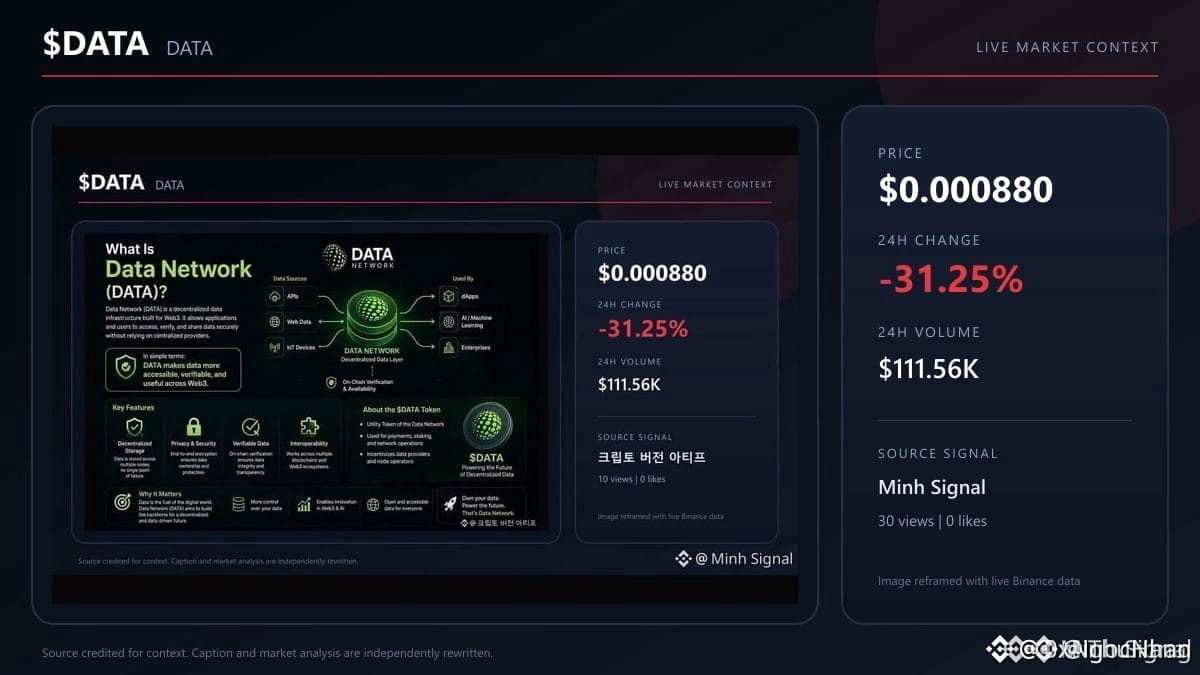

$DATA LONG
1. نجح الثيران في تحديد الأرضية تحت أقدامها ومحاولة تطوير حركة صعودية، بالاعتماد على القمة المحلية الأخيرة.
2. تم تصميم هيكل الإعداد بحيث يستهدف الأهداف تدريجيًا واحدًا تلو الآخر مع الحفاظ على الزخم الصعودي.
3. يسمح ملف المخاطر بالاحتفاظ بمركز طويل بشكل مريح طالما كان المشترون يتحكمون في الموقف.
➡️نقطة الدخول: 0.1852
🎯الهدف 1: 0.18676895 (+0.85%)
🎯الهدف 2: 0.1894379 (+2.29%)
🎯الهدف 3: 0.19344132 (+4.45%)
❌إيقاف الخسارة: 0.18009658 (-2.76%)
⚠️ هذا ليس توصية مالية. تاجر على مسؤوليتك الخاصة. DYOR.
#DATA #BinanceSquare #скальпинг 📈
$DATA
1. نجح الثيران في تحديد الأرضية تحت أقدامها ومحاولة تطوير حركة صعودية، بالاعتماد على القمة المحلية الأخيرة.
2. تم تصميم هيكل الإعداد بحيث يستهدف الأهداف تدريجيًا واحدًا تلو الآخر مع الحفاظ على الزخم الصعودي.
3. يسمح ملف المخاطر بالاحتفاظ بمركز طويل بشكل مريح طالما كان المشترون يتحكمون في الموقف.
➡️نقطة الدخول: 0.1852
🎯الهدف 1: 0.18676895 (+0.85%)
🎯الهدف 2: 0.1894379 (+2.29%)
🎯الهدف 3: 0.19344132 (+4.45%)
❌إيقاف الخسارة: 0.18009658 (-2.76%)
⚠️ هذا ليس توصية مالية. تاجر على مسؤوليتك الخاصة. DYOR.
#DATA #BinanceSquare #скальпинг 📈
$DATA
هل $DATA بالفعل بلغ القاع هنا أم أننا ما زلنا مبكرين لحدٍّ أعمق يستمر بالنزيف؟
انخفاض بنسبة 31% اليوم. مؤشر RSI عند 28 على فريم 4 ساعات. 🔻
هذا نمطي لمناطق ذروة البيع، لكن التداول بالكاد حيّ؛ نحن عند 10% فقط من التدفق المعتاد. لا أحد يتدخل بعد.
انخفاض بنسبة 83% عن القمة الأخيرة والالتصاق بأدنى مستويات متعددة الأسابيع. إما أن هذا هو المكان الذي يبدأ فيه التجميع بهدوء، أو أننا سنواصل الهبوط بينما الجميع يراقب من على الهامش.
أنا أميل إلى أنها قطة ميتة إذا لم يظهر حجم التداول قريبًا 📉
#DATA #Binance
انخفاض بنسبة 31% اليوم. مؤشر RSI عند 28 على فريم 4 ساعات. 🔻
هذا نمطي لمناطق ذروة البيع، لكن التداول بالكاد حيّ؛ نحن عند 10% فقط من التدفق المعتاد. لا أحد يتدخل بعد.
انخفاض بنسبة 83% عن القمة الأخيرة والالتصاق بأدنى مستويات متعددة الأسابيع. إما أن هذا هو المكان الذي يبدأ فيه التجميع بهدوء، أو أننا سنواصل الهبوط بينما الجميع يراقب من على الهامش.
أنا أميل إلى أنها قطة ميتة إذا لم يظهر حجم التداول قريبًا 📉
#DATA #Binance
هل $DATA كان بالفعل مُباعًا بأقل من قيمته عند مؤشر RSI=28 أم أننا نمسك بسكينًا ساقطًا هنا؟
انخفض بنسبة 31% اليوم. وانخفضت نسبة 23% أخرى خلال آخر 4 ساعات فقط.
الحجم ميت؛ نحن عند 10% من متوسط 20 يومًا، وهذا عادةً يعني أنه لا أحد يريد أن يتدخل بعد. السعر يبعد 83% عن أعلى مستوى خلال 30 يومًا ويقع تحت كلٍّ من المتوسطين 20 و50. هذا ترتيب هبوطي كامل 📉
لكن إليك الأمر.
عند RSI=28 نحن في منطقة البيع المفرط من الناحية الفنية. لم يتغير @streamr كمشروع بين عشية وضحاها. لذا فإما أن هذا هبوط حاد قبل ارتداد، أو أن هناك شيئًا بنيويًا يتم كسره ولا نراه على المخطط.
لقد رأيت كلا السيناريوهين يتحقق. السؤال هو: هل يُحافظ $0.000880 على مستواه أم أننا متجهون للأسفل للعثور على دعم حقيقي 🔍
ما تقييمك؟ هل هذه إعدادات لارتداد بعد البيع المفرط أم المزيد من الألم في الطريق؟
#DATA #Crypto #Trading
انخفض بنسبة 31% اليوم. وانخفضت نسبة 23% أخرى خلال آخر 4 ساعات فقط.
الحجم ميت؛ نحن عند 10% من متوسط 20 يومًا، وهذا عادةً يعني أنه لا أحد يريد أن يتدخل بعد. السعر يبعد 83% عن أعلى مستوى خلال 30 يومًا ويقع تحت كلٍّ من المتوسطين 20 و50. هذا ترتيب هبوطي كامل 📉
لكن إليك الأمر.
عند RSI=28 نحن في منطقة البيع المفرط من الناحية الفنية. لم يتغير @streamr كمشروع بين عشية وضحاها. لذا فإما أن هذا هبوط حاد قبل ارتداد، أو أن هناك شيئًا بنيويًا يتم كسره ولا نراه على المخطط.
لقد رأيت كلا السيناريوهين يتحقق. السؤال هو: هل يُحافظ $0.000880 على مستواه أم أننا متجهون للأسفل للعثور على دعم حقيقي 🔍
ما تقييمك؟ هل هذه إعدادات لارتداد بعد البيع المفرط أم المزيد من الألم في الطريق؟
#DATA #Crypto #Trading

$DATA تم سحقه للتو إلى $0.000880، وما زالت الشارة تبدو باهتة 😬 هبوط بنسبة 31.25% خلال اليوم، -23.5% خلال 4 ساعات، مع تداول لا يتجاوز $111.56K. مؤشر RSI(14) على إطار 4h عند 28، لذا فهو في حالة ذروة بيع (oversold)، لكن السعر ما زال تحت المتوسطات المتحركة للـ 20D و50D مع أحجام تداول ميتة عند 0.1x من الطبيعي. هذا ليس قوة—بل هلع في هواء رقيق. $DATA #DATA 🔥 #Web3 #Binance
مستوحى من 0xNgocNhan على Binance Square.
مستوحى من 0xNgocNhan على Binance Square.
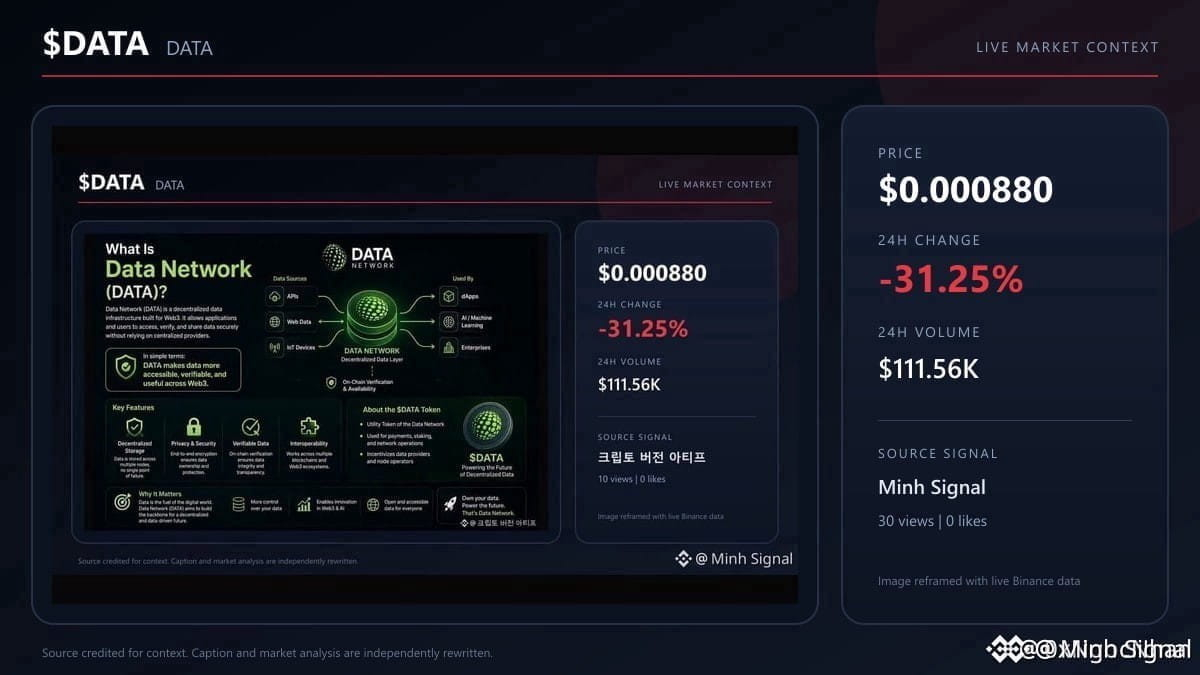
$DATA جالسة عند $0.000880 بعد انخفاض يومي بنسبة 31% وتراجع مؤشر RSI إلى 28 على إطار 4 ساعات 👀 الانهيار عدواني لكن حجم التداول فقط $111K، أقل بكثير من المتوسط، لذا يبدو الأمر أقرب إلى «جيوب هوائية» أكثر من كونه قناعة حقيقية. ما زال محاصرًا تحت كلا متوسطَي الحركة وفي نطاق 30 يومًا عميقًا، لكن عندما تتضخم إعدادات البيع المفرط إلى هذا الحد على أحجام تداول وهمية، يمكن أن ترتد بسرعة بنفس القدر. سرد بيانات Web3 ليس ميتًا، بل ينزف ببطء من الأيدي الضعيفة 🩸 $DATA #DATA #Altcoin #Crypto
مستوحى من Minh Signal على Binance Square.
مستوحى من Minh Signal على Binance Square.
سجّل الدخول لاستكشاف المزيد من المُحتوى