Binance Square

blockchaintechnology

570,851 مشاهدات
1,341 يقومون بالنقاش
Mavik_Leo
·
--
Ethereum Improvement Proposal (EIP): The Governance Engine Behind Ethereum’s EvolutionAn Ethereum Improvement Proposal (EIP) is the formal framework through which changes, upgrades, and innovations are proposed, discussed, and implemented within Ethereum. Because Ethereum operates as a decentralized platform without a central authority, it requires a structured and transparent method for decision-making. EIPs serve this purpose by providing a standardized way for developers, researchers, and community members to introduce ideas that can shape how the network functions. Unlike traditional software platforms controlled by executives or corporate boards, Ethereum evolves through community collaboration. Anyone can draft an EIP, but its journey from idea to implementation involves extensive review, technical scrutiny, and social consensus. This open governance model ensures that the network grows through collective agreement rather than unilateral control. At the heart of the EIP process is a commitment to transparency and documentation. Each proposal must clearly describe the motivation behind the change, the technical specifications, potential risks, and how the proposal affects users and developers. This structure allows participants across the global Ethereum ecosystem to understand, critique, and refine new ideas before they are adopted. The review process often involves some of the most experienced contributors in the ecosystem, including Ethereum’s co-founder Vitalik Buterin. While influential figures may provide technical insight or guidance, they do not have unilateral authority. Decisions emerge through community discussion across developer forums, research groups, and open-source repositories. This balance between expertise and collective participation reflects the decentralized philosophy that defines Ethereum itself. The need for structured governance became especially clear during one of Ethereum’s earliest and most dramatic crises involving The DAO. The DAO was an experimental decentralized investment fund built on Ethereum that suffered a major vulnerability exploit. A large amount of Ether was drained due to a flaw in the smart contract code, triggering intense debate across the community. Should the blockchain remain unchanged, preserving immutability, or should intervention occur to reverse the damage? After extensive discussion, the community chose to implement a hard fork to restore the lost funds. This moment demonstrated that while blockchain systems rely heavily on code, human governance remains essential. It also highlighted the importance of structured proposal mechanisms, strengthening the role of EIPs as the formal process for managing change. EIPs are categorized based on their purpose. Some focus on core protocol changes that affect how Ethereum itself operates, including consensus mechanisms and transaction rules. Others define standards that allow applications and tokens to interact consistently across the ecosystem. For example, many widely used token standards originated from EIPs, helping ensure compatibility between wallets, exchanges, and decentralized applications. There are also informational EIPs, which provide guidelines, research insights, or design recommendations without requiring network changes. The lifecycle of an EIP follows a clear progression. It begins as a draft, where the proposal is introduced and refined through feedback. After technical and community review, it may move into active consideration. If consensus forms around the idea, it can be finalized and implemented through a network upgrade. Some proposals are rejected or withdrawn if they fail to gain support or present unacceptable risks. This structured lifecycle ensures that only carefully examined changes affect the network. One of the most impactful examples of the EIP process in action is EIP-1559, which fundamentally changed Ethereum’s transaction fee system. Before this update, users submitted bids to have their transactions processed, leading to unpredictable costs and inefficient fee estimation. The proposal introduced a dynamic pricing model with a base fee that adjusts automatically according to network congestion and an optional priority fee for faster processing. Importantly, the base fee is permanently removed from circulation, influencing the long-term supply dynamics of Ether. This single proposal reshaped both the economic and user-experience aspects of Ethereum. Beyond economic changes, EIPs have also guided some of Ethereum’s largest technological transformations. The transition from energy-intensive mining to a staking-based validation system required years of coordinated research, testing, and specification development. Such major transitions demonstrate how EIPs function not merely as technical documents but as instruments of long-term strategic direction. Consensus plays a central role in whether an EIP becomes reality. Technical feasibility alone is not enough; the community must broadly agree that the proposal improves the network without compromising security or decentralization. This combination of engineering discipline and social coordination is one of Ethereum’s defining characteristics. Every major upgrade represents both a technical implementation and a collective decision. The EIP framework also ensures accountability. Because proposals are public and archived, the reasoning behind every major change is documented for future reference. This historical record allows developers and researchers to understand why specific design decisions were made, reducing confusion and supporting ongoing innovation. Another important aspect of EIPs is their ability to encourage experimentation while maintaining stability. Developers can propose bold ideas, but the structured review process prevents rushed or poorly tested changes from entering the protocol. This careful balance allows Ethereum to evolve rapidly while preserving reliability for users and applications that depend on it. In essence, Ethereum Improvement Proposals act as the bridge between human intention and machine execution. They transform community discussion into formal specifications and ultimately into running code. Without EIPs, Ethereum would lack the organized governance structure needed to coordinate thousands of contributors across the world. As Ethereum continues to expand in scale and complexity, the importance of EIPs only grows. They are not merely technical paperwork; they are the living blueprint of the network’s evolution. Every upgrade, standard, and major transformation passes through this process, ensuring that Ethereum remains adaptable, transparent, and community-driven in its development. #Ethereum #EIP #CryptoEducation #BlockchainTechnology

Ethereum Improvement Proposal (EIP): The Governance Engine Behind Ethereum’s Evolution

An Ethereum Improvement Proposal (EIP) is the formal framework through which changes, upgrades, and innovations are proposed, discussed, and implemented within Ethereum. Because Ethereum operates as a decentralized platform without a central authority, it requires a structured and transparent method for decision-making. EIPs serve this purpose by providing a standardized way for developers, researchers, and community members to introduce ideas that can shape how the network functions.

Unlike traditional software platforms controlled by executives or corporate boards, Ethereum evolves through community collaboration. Anyone can draft an EIP, but its journey from idea to implementation involves extensive review, technical scrutiny, and social consensus. This open governance model ensures that the network grows through collective agreement rather than unilateral control.

At the heart of the EIP process is a commitment to transparency and documentation. Each proposal must clearly describe the motivation behind the change, the technical specifications, potential risks, and how the proposal affects users and developers. This structure allows participants across the global Ethereum ecosystem to understand, critique, and refine new ideas before they are adopted.

The review process often involves some of the most experienced contributors in the ecosystem, including Ethereum’s co-founder Vitalik Buterin. While influential figures may provide technical insight or guidance, they do not have unilateral authority. Decisions emerge through community discussion across developer forums, research groups, and open-source repositories. This balance between expertise and collective participation reflects the decentralized philosophy that defines Ethereum itself.

The need for structured governance became especially clear during one of Ethereum’s earliest and most dramatic crises involving The DAO. The DAO was an experimental decentralized investment fund built on Ethereum that suffered a major vulnerability exploit. A large amount of Ether was drained due to a flaw in the smart contract code, triggering intense debate across the community. Should the blockchain remain unchanged, preserving immutability, or should intervention occur to reverse the damage?

After extensive discussion, the community chose to implement a hard fork to restore the lost funds. This moment demonstrated that while blockchain systems rely heavily on code, human governance remains essential. It also highlighted the importance of structured proposal mechanisms, strengthening the role of EIPs as the formal process for managing change.

EIPs are categorized based on their purpose. Some focus on core protocol changes that affect how Ethereum itself operates, including consensus mechanisms and transaction rules. Others define standards that allow applications and tokens to interact consistently across the ecosystem. For example, many widely used token standards originated from EIPs, helping ensure compatibility between wallets, exchanges, and decentralized applications. There are also informational EIPs, which provide guidelines, research insights, or design recommendations without requiring network changes.

The lifecycle of an EIP follows a clear progression. It begins as a draft, where the proposal is introduced and refined through feedback. After technical and community review, it may move into active consideration. If consensus forms around the idea, it can be finalized and implemented through a network upgrade. Some proposals are rejected or withdrawn if they fail to gain support or present unacceptable risks. This structured lifecycle ensures that only carefully examined changes affect the network.

One of the most impactful examples of the EIP process in action is EIP-1559, which fundamentally changed Ethereum’s transaction fee system. Before this update, users submitted bids to have their transactions processed, leading to unpredictable costs and inefficient fee estimation. The proposal introduced a dynamic pricing model with a base fee that adjusts automatically according to network congestion and an optional priority fee for faster processing. Importantly, the base fee is permanently removed from circulation, influencing the long-term supply dynamics of Ether. This single proposal reshaped both the economic and user-experience aspects of Ethereum.

Beyond economic changes, EIPs have also guided some of Ethereum’s largest technological transformations. The transition from energy-intensive mining to a staking-based validation system required years of coordinated research, testing, and specification development. Such major transitions demonstrate how EIPs function not merely as technical documents but as instruments of long-term strategic direction.

Consensus plays a central role in whether an EIP becomes reality. Technical feasibility alone is not enough; the community must broadly agree that the proposal improves the network without compromising security or decentralization. This combination of engineering discipline and social coordination is one of Ethereum’s defining characteristics. Every major upgrade represents both a technical implementation and a collective decision.

The EIP framework also ensures accountability. Because proposals are public and archived, the reasoning behind every major change is documented for future reference. This historical record allows developers and researchers to understand why specific design decisions were made, reducing confusion and supporting ongoing innovation.

Another important aspect of EIPs is their ability to encourage experimentation while maintaining stability. Developers can propose bold ideas, but the structured review process prevents rushed or poorly tested changes from entering the protocol. This careful balance allows Ethereum to evolve rapidly while preserving reliability for users and applications that depend on it.

In essence, Ethereum Improvement Proposals act as the bridge between human intention and machine execution. They transform community discussion into formal specifications and ultimately into running code. Without EIPs, Ethereum would lack the organized governance structure needed to coordinate thousands of contributors across the world.

As Ethereum continues to expand in scale and complexity, the importance of EIPs only grows. They are not merely technical paperwork; they are the living blueprint of the network’s evolution. Every upgrade, standard, and major transformation passes through this process, ensuring that Ethereum remains adaptable, transparent, and community-driven in its development.
#Ethereum
#EIP
#CryptoEducation
#BlockchainTechnology
I’ve been looking into @fogo lately. Beyond the hype, the ecosystem is built to challenge traditional financial structures through a sophisticated DAO model. Governance: Community-led decision-making. Vision: A "controlled burn" of inefficient legacy systems. Opportunity: Early-stage ecosystem growth. Financial Opportunity, Get Onboard ($FOGO). My cat might not get the tech, but the charts don't lie. 😸 #FogoChain #defi #DAO #BlockchainTechnology #BinanceSquareTalks $FOGO {future}(FOGOUSDT)
I’ve been looking into @Fogo Official lately. Beyond the hype, the ecosystem is built to challenge traditional financial structures through a sophisticated DAO model.

Governance: Community-led decision-making.

Vision: A "controlled burn" of inefficient legacy systems.

Opportunity: Early-stage ecosystem growth.

Financial Opportunity, Get Onboard ($FOGO ). My cat might not get the tech, but the charts don't lie. 😸

#FogoChain #defi #DAO #BlockchainTechnology #BinanceSquareTalks $FOGO
·
--
🔥 $FOGO: The Layer 1 Speed Demon You Can't Ignore⚡ The Power of the $FOGO Ecosystem: Redefining Layer 1 Beyond its raw speed, the $FOGO project introduces "Fogo Sessions"—a total game-changer for the on-chain user experience. Here’s why the industry is taking notice: 🚀 Key Innovations Gasless Trading: Interact with dApps seamlessly without the friction of manually signing every single pop-up. Enshrined Liquidity: Experience superior depth with native order books and price oracles built directly into the protocol level. Institutional Grade: A curated validator set ensures the network remains stable and highly reliable, even under extreme heavy load. 💎 The Utility of $FOGO The native token, $FOGO, sits at the heart of all activity, powering: Gas Fees for all network transactions. Staking Rewards for securing the ecosystem. Governance to shape the future of the protocol. 📈 Looking Ahead to 2026 With the mainnet now live and the ecosystem rapidly expanding through protocols like Valiant and Pyron, the momentum is undeniable. The focus for @fogo remains clear: scaling the "Speed of Light" trading experience to the masses. Whether you are a DeFi enthusiast or an institutional player, Fogo is providing the infrastructure to make on-chain finance as seamless as its centralized counterparts. 🌐 #FOGO #fogo #CryptoInnovations #SVM #DeFi #BlockchainTechnology

🔥 $FOGO: The Layer 1 Speed Demon You Can't Ignore

⚡ The Power of the $FOGO Ecosystem: Redefining Layer 1
Beyond its raw speed, the $FOGO project introduces "Fogo Sessions"—a total game-changer for the on-chain user experience. Here’s why the industry is taking notice:
🚀 Key Innovations
Gasless Trading: Interact with dApps seamlessly without the friction of manually signing every single pop-up.
Enshrined Liquidity: Experience superior depth with native order books and price oracles built directly into the protocol level.
Institutional Grade: A curated validator set ensures the network remains stable and highly reliable, even under extreme heavy load.
💎 The Utility of $FOGO
The native token, $FOGO, sits at the heart of all activity, powering:
Gas Fees for all network transactions.
Staking Rewards for securing the ecosystem.
Governance to shape the future of the protocol.
📈 Looking Ahead to 2026
With the mainnet now live and the ecosystem rapidly expanding through protocols like Valiant and Pyron, the momentum is undeniable. The focus for @Fogo Official remains clear: scaling the "Speed of Light" trading experience to the masses.
Whether you are a DeFi enthusiast or an institutional player, Fogo is providing the infrastructure to make on-chain finance as seamless as its centralized counterparts. 🌐

#FOGO #fogo #CryptoInnovations #SVM #DeFi #BlockchainTechnology
@fogo #FOGO $FOGOFogo is a high-performance Layer 1 blockchain built primarily on the Solana Virtual Machine (SVM). Its strongest feature is the integration of the Firedancer client. While traditional blockchains take several seconds to process, Fogo has the capability to ensure block times of just 40 milliseconds. It is specifically designed for high-frequency trading and real-time on-chain transactions. ​Key Features: ​Ultra-Fast Speed: Its throughput and latency provide traders with an experience comparable to a Centralized Exchange (CEX). ​Ecosystem Security: It ensures network safety through robust cryptographic protection and a curated set of validators. ​Token Utility: The $FOGO token is used for paying network gas fees, staking, and governance participation. ​If you are a crypto enthusiast interested in next-generation blockchain technology, @fogo could be an excellent subject for your research. For those seeking speed and precision in on-chain trading, this could be a genuine game-changer. ​Currently, there are exciting events surrounding this project on Binance Square. Learn more about $FOGO to bring innovation to your portfolio and join their growing community. ​#fogo #Binance #CryptoNews #Layer1 #BlockchainTechnology

@fogo #FOGO $FOGO

Fogo is a high-performance Layer 1 blockchain built primarily on the Solana Virtual Machine (SVM). Its strongest feature is the integration of the Firedancer client. While traditional blockchains take several seconds to process, Fogo has the capability to ensure block times of just 40 milliseconds. It is specifically designed for high-frequency trading and real-time on-chain transactions.

​Key Features:

​Ultra-Fast Speed: Its throughput and latency provide traders with an experience comparable to a Centralized Exchange (CEX).
​Ecosystem Security: It ensures network safety through robust cryptographic protection and a curated set of validators.
​Token Utility: The $FOGO token is used for paying network gas fees, staking, and governance participation.

​If you are a crypto enthusiast interested in next-generation blockchain technology, @fogo could be an excellent subject for your research. For those seeking speed and precision in on-chain trading, this could be a genuine game-changer.

​Currently, there are exciting events surrounding this project on Binance Square. Learn more about $FOGO to bring innovation to your portfolio and join their growing community.

​#fogo #Binance #CryptoNews #Layer1 #BlockchainTechnology
Vanar Chain: More than just another L1 hype?Anyone watching the crypto market and the current flood of Layer 1 solutions quickly becomes skeptical. Too much marketing swirl, too little real application. But at @vanar, it's worth taking a second look at the architecture. While other projects try to be everything at once, the ecosystem around $VANRY focuses on a crucial niche: the bridge between mainstream entertainment, gaming and blockchain efficiency. The technical barrier is often the biggest obstacle to mass adaptation. The Vanar Chain starts right here, optimizing transaction costs and speed to truly scale businesses. It's not just about speculation, it's about real infrastructure. Anyone who has $VANRY in their portfolio or observes the project will see that they are actively working on the foundation for the next wave of Web3 integration. In a market often driven by short-term hype, #Vanar's strategic direction is a refreshing approach. You build an ecosystem here that not only exists on paper, but is underpinned by partnerships and technical know-how. Time will tell whether this will prevail against the top dogs in the long term - but the course is definitely set for growth. #Vanar #CryptoAnalysis #L1 #Web3 #BlockchainTechnology $VANRY {future}(VANRYUSDT)

Vanar Chain: More than just another L1 hype?

Anyone watching the crypto market and the current flood of Layer 1 solutions quickly becomes skeptical. Too much marketing swirl, too little real application. But at @vanar, it's worth taking a second look at the architecture. While other projects try to be everything at once, the ecosystem around $VANRY focuses on a crucial niche: the bridge between mainstream entertainment, gaming and blockchain efficiency.
The technical barrier is often the biggest obstacle to mass adaptation. The Vanar Chain starts right here, optimizing transaction costs and speed to truly scale businesses. It's not just about speculation, it's about real infrastructure. Anyone who has $VANRY in their portfolio or observes the project will see that they are actively working on the foundation for the next wave of Web3 integration.
In a market often driven by short-term hype, #Vanar's strategic direction is a refreshing approach. You build an ecosystem here that not only exists on paper, but is underpinned by partnerships and technical know-how. Time will tell whether this will prevail against the top dogs in the long term - but the course is definitely set for growth.
#Vanar
#CryptoAnalysis
#L1
#Web3
#BlockchainTechnology
$VANRY
Explanation of Blockchain Technology$BTC $ETH $XRP Blockchain technology is a decentralized, secure, and transparent way to record and store data (most commonly transactions) across a network of computers, without needing any central authority like a bank, government, or company to control or verify it.Think of it as a digital ledger (like a shared Google Sheet that nobody can secretly edit) — but much more powerful and secure.Core Idea in Simple TermsImagine a chain of locked boxes (blocks). Each box contains: A list of recent transactions or data recordsA timestampA unique fingerprint (called a hash)And importantly — the fingerprint of the previous box Because each box points to the one before it through cryptography, you get an unbreakable chain. If someone tries to change anything in an old box, its hash changes → which breaks the link to the next box → and the entire network immediately notices something is wrong.Key Characteristics of Blockchain (2025–2026 perspective) Feature What it means Why it matters Decentralized No single owner/server — data lives on thousands of computers (nodes) worldwide No single point of failure or control Immutable Once data is written and confirmed, it cannot be changed or deleted Creates trust without needing to trust any one party Transparent Everyone can see the records (on public blockchains) Auditable by anyone Secure Protected by cryptography + consensus rules Extremely hard to hack or forge Distributed Every full participant has a complete copy of the ledger System keeps running even if many nodes go offline How a New Block Gets Added (Simplified) Someone creates a transaction (e.g. "Charles sends 1 ETH to Alice" or "Supply chain part X moved from factory A to warehouse B")The transaction is broadcast to the networkNodes check if it's valid (correct signatures, enough balance, follows rules)Valid transactions are collected into a candidate blockNodes compete / agree (via consensus mechanism — Proof of Stake, Proof of Work, etc.) to decide which block gets added nextThe winning block is linked to the previous one → chain growsEveryone updates their copy of the blockchain Most Famous ExampleBitcoin (2009) was the first real-world blockchain. It uses blockchain to record who owns how much Bitcoin — without any bank in the middle.Beyond Crypto (2025–2026 reality)Blockchain is now used far beyond just cryptocurrencies: Stablecoin & cross-border payments (faster + cheaper than SWIFT)Tokenized real-world assets (real estate, stocks, art on-chain)Supply chain tracking (verify authenticity of products)Digital identity & credentialsSmart contracts (self-executing agreements — e.g. "pay automatically when package arrives")Decentralized finance (DeFi), gaming (NFTs/game assets), DAOs, etc. In short: Blockchain = a tamper-proof, shared notebook that nobody owns, everyone can verify, and no one can cheat on — once something is written, it's permanent.Let me know if you'd like: A deeper dive into how consensus worksExplanation of public vs private blockchainsCurrent major use-cases in 2026Or how NFTs / Web3 connect to this Happy to go as simple or technical as you want! #BlockChainTechnology #blockchaineconomy #BlockchainDecentralization {spot}(BTCUSDT) {spot}(ETHUSDT) {spot}(SOLUSDT)

Explanation of Blockchain Technology

$BTC $ETH $XRP
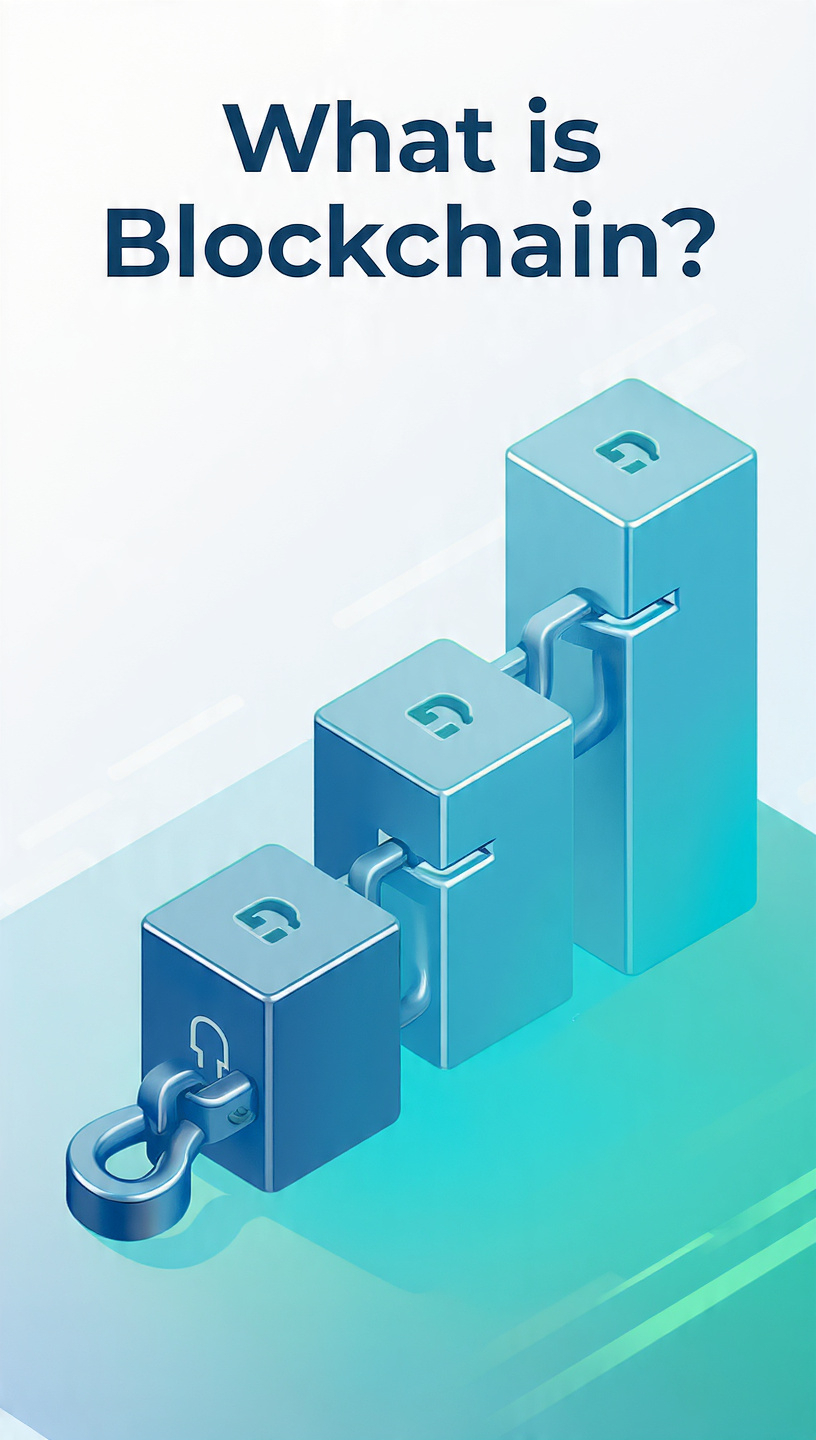
Blockchain technology is a decentralized, secure, and transparent way to record and store data (most commonly transactions) across a network of computers, without needing any central authority like a bank, government, or company to control or verify it.Think of it as a digital ledger (like a shared Google Sheet that nobody can secretly edit) — but much more powerful and secure.Core Idea in Simple TermsImagine a chain of locked boxes (blocks).
Each box contains:
A list of recent transactions or data recordsA timestampA unique fingerprint (called a hash)And importantly — the fingerprint of the previous box
Because each box points to the one before it through cryptography, you get an unbreakable chain. If someone tries to change anything in an old box, its hash changes → which breaks the link to the next box → and the entire network immediately notices something is wrong.Key Characteristics of Blockchain (2025–2026 perspective)
Feature
What it means
Why it matters
Decentralized
No single owner/server — data lives on thousands of computers (nodes) worldwide
No single point of failure or control
Immutable
Once data is written and confirmed, it cannot be changed or deleted
Creates trust without needing to trust any one party
Transparent
Everyone can see the records (on public blockchains)
Auditable by anyone
Secure
Protected by cryptography + consensus rules
Extremely hard to hack or forge
Distributed
Every full participant has a complete copy of the ledger
System keeps running even if many nodes go offline
How a New Block Gets Added (Simplified)
Someone creates a transaction (e.g. "Charles sends 1 ETH to Alice" or "Supply chain part X moved from factory A to warehouse B")The transaction is broadcast to the networkNodes check if it's valid (correct signatures, enough balance, follows rules)Valid transactions are collected into a candidate blockNodes compete / agree (via consensus mechanism — Proof of Stake, Proof of Work, etc.) to decide which block gets added nextThe winning block is linked to the previous one → chain growsEveryone updates their copy of the blockchain
Most Famous ExampleBitcoin (2009) was the first real-world blockchain.
It uses blockchain to record who owns how much Bitcoin — without any bank in the middle.Beyond Crypto (2025–2026 reality)Blockchain is now used far beyond just cryptocurrencies:
Stablecoin & cross-border payments (faster + cheaper than SWIFT)Tokenized real-world assets (real estate, stocks, art on-chain)Supply chain tracking (verify authenticity of products)Digital identity & credentialsSmart contracts (self-executing agreements — e.g. "pay automatically when package arrives")Decentralized finance (DeFi), gaming (NFTs/game assets), DAOs, etc.
In short:
Blockchain = a tamper-proof, shared notebook that nobody owns, everyone can verify, and no one can cheat on — once something is written, it's permanent.Let me know if you'd like:
A deeper dive into how consensus worksExplanation of public vs private blockchainsCurrent major use-cases in 2026Or how NFTs / Web3 connect to this
Happy to go as simple or technical as you want! #BlockChainTechnology #blockchaineconomy #BlockchainDecentralization

​🚀 Deep Dive into @fogo: The Next Generation of L1 Blockchains! 🚀​🚀 Deep Dive into @fogo: The Next Generation of L1 Blockchains! 🚀 ​As a creator focused on high-potential projects, I’ve been closely monitoring the evolution of the $FOGO ecosystem. What makes this project stand out is its seamless integration of the Solana Virtual Machine (SVM), which allows for incredible speed and scalability that the market desperately needs. ​For my community of 280+ followers, it’s important to understand that #fogo isn't just about fast transactions; it’s about building a robust environment for decentralized applications. The technical foundation they are laying today could redefine how we interact with Web3 in 2026. 📈 ​I’m particularly impressed with their roadmap and the growing energy within the community. Are you guys holding $FOGO for the long term, or are you looking at short-term trading opportunities? Let’s start a discussion in the comments! 👇🔥 ​#BinanceSquare #CryptoAnalysis #FogoL1 #SVM #BlockchainTechnology

​🚀 Deep Dive into @fogo: The Next Generation of L1 Blockchains! 🚀

​🚀 Deep Dive into @fogo: The Next Generation of L1 Blockchains! 🚀

​As a creator focused on high-potential projects, I’ve been closely monitoring the evolution of the $FOGO ecosystem. What makes this project stand out is its seamless integration of the Solana Virtual Machine (SVM), which allows for incredible speed and scalability that the market desperately needs.

​For my community of 280+ followers, it’s important to understand that #fogo isn't just about fast transactions; it’s about building a robust environment for decentralized applications. The technical foundation they are laying today could redefine how we interact with Web3 in 2026. 📈

​I’m particularly impressed with their roadmap and the growing energy within the community. Are you guys holding $FOGO for the long term, or are you looking at short-term trading opportunities? Let’s start a discussion in the comments! 👇🔥

#BinanceSquare #CryptoAnalysis #FogoL1 #SVM #BlockchainTechnology
$VANRY: Bridging Innovation and AccessibilityAccessibility is key in crypto adoption, and @Vanar is making it easier than ever. $VANRY powers a network where developers can build without barriers, and users can engage without friction. The #vanar ecosystem emphasizes real utility, making it a project that’s likely to grow organically as adoption increases. #vanar #VANRY #CryptoAccessibility #BlockchainTechnology #DeFiGrowthSpurt

$VANRY: Bridging Innovation and Accessibility

Accessibility is key in crypto adoption, and @Vanarchain is making it easier than ever. $VANRY powers a network where developers can build without barriers, and users can engage without friction. The #vanar ecosystem emphasizes real utility, making it a project that’s likely to grow organically as adoption increases.
#vanar #VANRY #CryptoAccessibility #BlockchainTechnology #DeFiGrowthSpurt
The Intelligence Layer Revolution: Why Vanar Chain is Redefining Web3 Utility in 2026​As the blockchain landscape matures, the focus has shifted from mere transaction speed to "on-chain intelligence." At the forefront of this evolution is @vanar, a project that has successfully transitioned from being just a high-performance L1 to becoming a vertically integrated AI infrastructure stack. ​Beyond the Hype: The 5-Layer Stack ​What sets Vanar apart is its unique architectural approach. Unlike other chains that "bolt-on" AI features, Vanar is AI-native. Its ecosystem is built on a sophisticated 5-layer stack: ​Vanar Chain: The scalable, modular L1 foundation. ​Neutron: A revolutionary semantic memory layer that achieves up to 500:1 data compression, allowing massive datasets to be stored on-chain as "Neutron Seeds." ​Kayon: The decentralized reasoning engine that enables smart contracts to perform complex predictions and pattern recognition. ​Axon & Flows: Upcoming layers designed for autonomous workflow orchestration and industry-specific applications. ​Real Utility for $VANRY ​The tokenomics of $VANRY are evolving to match this technical growth. Starting in Q1 2026, core tools like myNeutron and Kayon are transitioning to a subscription-based model. This isn’t just about revenue; it creates a consistent on-chain demand for $VANRY as the "essential fuel" for AI operations. With built-in burn mechanisms tied to these subscriptions, the ecosystem is creating structural deflationary pressure that rewards long-term holders. ​Scaling with CreatorPad ​Through initiatives like CreatorPad, @undefined is actively lowering the barrier to entry for developers and brands. By offering fixed, predictable transaction fees (as low as $0.0005) and a suite of "AI-assisted deployment" tools, Vanar has become the preferred choice for mainstream giants like Shelby American and Worldpay. ​As we look toward the rest of 2026, the arrival of Governance 2.0 will further empower the community, allowing $VANRY holders to directly influence AI model parameters. Vanar isn't just building a chain; it's building a "thinking" infrastructure for the future of PayFi, gaming, and real-world assets.

The Intelligence Layer Revolution: Why Vanar Chain is Redefining Web3 Utility in 2026

​As the blockchain landscape matures, the focus has shifted from mere transaction speed to "on-chain intelligence." At the forefront of this evolution is @vanar, a project that has successfully transitioned from being just a high-performance L1 to becoming a vertically integrated AI infrastructure stack.

​Beyond the Hype: The 5-Layer Stack

​What sets Vanar apart is its unique architectural approach. Unlike other chains that "bolt-on" AI features, Vanar is AI-native. Its ecosystem is built on a sophisticated 5-layer stack:

​Vanar Chain: The scalable, modular L1 foundation.
​Neutron: A revolutionary semantic memory layer that achieves up to 500:1 data compression, allowing massive datasets to be stored on-chain as "Neutron Seeds."
​Kayon: The decentralized reasoning engine that enables smart contracts to perform complex predictions and pattern recognition.
​Axon & Flows: Upcoming layers designed for autonomous workflow orchestration and industry-specific applications.

​Real Utility for $VANRY

​The tokenomics of $VANRY are evolving to match this technical growth. Starting in Q1 2026, core tools like myNeutron and Kayon are transitioning to a subscription-based model. This isn’t just about revenue; it creates a consistent on-chain demand for $VANRY as the "essential fuel" for AI operations. With built-in burn mechanisms tied to these subscriptions, the ecosystem is creating structural deflationary pressure that rewards long-term holders.

​Scaling with CreatorPad

​Through initiatives like CreatorPad, @undefined is actively lowering the barrier to entry for developers and brands. By offering fixed, predictable transaction fees (as low as $0.0005) and a suite of "AI-assisted deployment" tools, Vanar has become the preferred choice for mainstream giants like Shelby American and Worldpay.

​As we look toward the rest of 2026, the arrival of Governance 2.0 will further empower the community, allowing $VANRY holders to directly influence AI model parameters. Vanar isn't just building a chain; it's building a "thinking" infrastructure for the future of PayFi, gaming, and real-world assets.
Maximizing Your Gains with $FOGO: The Strategic Guide for Binance UsersSuccess in the @Binance market requires more than just luck; it requires a strategy. Today, we dive deep into @fogo , the token that is currently dominating the #Binance ecosystem. Many retail investors make the mistake of joining the party when it’s already over. But with @FOGO, the party is just starting. The current #SpringEarnFiesta provides a unique window of opportunity. By engaging with the Binance Mission Center, users are getting exposure to a high-potential asset without the initial capital risk. This is the definition of 'Smart Entry'. But what happens after the airdrop? That’s where the real money is made. FOGO is designed with a 'Burn-and-Mint' equilibrium that ensures long-term sustainability. As the demand for decentralized gaming servers grows, the utility of FOGO increases exponentially. This isn't just another token on your dashboard; it's a piece of the future internet infrastructure. Look at the @Binance charts: the support levels for FOGO are holding strong, indicating that the 'Whales' are not selling; they are staking. The APY offered in the Simple Earn section is one of the most competitive in the market right now. If you’re not staking your FOGO, you’re leaving money on the table. In the world of #Cryptocurrency, those who understand the 'Narrative' win the game. The narrative for 2026 is 'Real World Utility'. FOGO fits this perfectly. Whether you are a day trader or a long-term holder, the volatility in FOGO provides multiple entry points for those who are patient. Join the FOGO movement today. Share your thoughts below: Are you HODLing for the moon, or are you taking profits at the next resistance? Let’s build this community together! #FOGO #tradingStrategy #BinanceSquare #100xgems #BlockchainTechnology $FOGO {spot}(FOGOUSDT)

Maximizing Your Gains with $FOGO: The Strategic Guide for Binance Users

Success in the @Binance market requires more than just luck; it requires a strategy. Today, we dive deep into @Fogo Official , the token that is currently dominating the #Binance ecosystem.
Many retail investors make the mistake of joining the party when it’s already over. But with @FOGO, the party is just starting. The current #SpringEarnFiesta provides a unique window of opportunity. By engaging with the Binance Mission Center, users are getting exposure to a high-potential asset without the initial capital risk. This is the definition of 'Smart Entry'.
But what happens after the airdrop? That’s where the real money is made. FOGO is designed with a 'Burn-and-Mint' equilibrium that ensures long-term sustainability. As the demand for decentralized gaming servers grows, the utility of FOGO increases exponentially. This isn't just another token on your dashboard; it's a piece of the future internet infrastructure.
Look at the @Binance charts: the support levels for FOGO are holding strong, indicating that the 'Whales' are not selling; they are staking. The APY offered in the Simple Earn section is one of the most competitive in the market right now. If you’re not staking your FOGO, you’re leaving money on the table.
In the world of #Cryptocurrency, those who understand the 'Narrative' win the game. The narrative for 2026 is 'Real World Utility'. FOGO fits this perfectly. Whether you are a day trader or a long-term holder, the volatility in FOGO provides multiple entry points for those who are patient.
Join the FOGO movement today. Share your thoughts below: Are you HODLing for the moon, or are you taking profits at the next resistance? Let’s build this community together!
#FOGO #tradingStrategy #BinanceSquare #100xgems #BlockchainTechnology
$FOGO
💎 Virtual Coin — The Future of Digital Money! $VIRTUAL Coin (VIRTUAL) is a cryptocurrency that powers Virtual Coin Network, designed for fast, low-cost digital transactions anywhere in the world. ⚡ Why It’s Cool • Instant payments ⏱️ • Super low fees 💰 • Safe & secure 🔒 • Can be used for online shopping, gaming, and more 🛒🎮 📊 Market Buzz VIRTUAL is gaining attention as more traders and users adopt it. Price charts show active movement, and support/resistance levels are key for trend watchers! 🚀 Why Traders Love It • Fast transactions ⚡ • Easy to send & receive 💸 • Growing adoption worldwide 🌍 • Community-driven updates 🤝 $VIRTUAL Coin makes digital money simple, fast, and fun — the crypto to watch! 👀 #virtualcoin #CryptoUpdates #DigitalMoney #BlockchainTechnology #altcoins
💎 Virtual Coin — The Future of Digital Money!

$VIRTUAL Coin (VIRTUAL) is a cryptocurrency that powers Virtual Coin Network, designed for fast, low-cost digital transactions anywhere in the world.

⚡ Why It’s Cool
• Instant payments ⏱️
• Super low fees 💰
• Safe & secure 🔒
• Can be used for online shopping, gaming, and more 🛒🎮

📊 Market Buzz
VIRTUAL is gaining attention as more traders and users adopt it. Price charts show active movement, and support/resistance levels are key for trend watchers!

🚀 Why Traders Love It
• Fast transactions ⚡
• Easy to send & receive 💸
• Growing adoption worldwide 🌍
• Community-driven updates 🤝

$VIRTUAL Coin makes digital money simple, fast, and fun — the crypto to watch! 👀

#virtualcoin #CryptoUpdates #DigitalMoney #BlockchainTechnology #altcoins
I Spent Hours Watching the Blockchain Breathe: How Cryptocurrency Transactions Are Really VerifiedI’ve been watching the blockchain for a long time now. Not just reading headlines or skimming whitepapers, but actually spending hours trying to understand what’s happening behind the scenes every time someone sends crypto from one wallet to another. I spent a lot of time on research, tracing how a simple click on “send” turns into something permanent, public, and nearly impossible to reverse. And the more I learned, the more I realized that transaction verification is the quiet engine that keeps the entire crypto world alive. When you send cryptocurrency, you’re not asking a bank for permission. There’s no clerk, no middleman, no office that opens at nine and closes at five. What you’re really doing is broadcasting a message to a massive global network. That message says, “I own these coins, and I want to send them to this address.” To prove that it’s really you, your wallet creates a digital signature using your private keys. I’ve always found this part fascinating, because the network can verify the signature is valid without ever knowing your private key itself. Ownership is proven through math, not trust. Once that transaction is created, it doesn’t quietly slide into a database. It gets shared across thousands of computers, known as nodes, scattered all over the world. I’ve watched how these nodes independently check the transaction, making sure the sender actually has enough balance and that the coins haven’t already been spent somewhere else. If something looks wrong, the transaction is rejected instantly. If everything checks out, it waits alongside many other transactions, like passengers lining up before boarding a flight. What really impressed me during my research is how the network agrees on what’s true. Since there’s no central authority, everyone has to follow the same rules and reach the same conclusion. This is where consensus mechanisms come in, and they are the real heart of verification. Different blockchains use different methods, but the goal is always the same: make cheating so difficult and expensive that honesty becomes the best option. In systems like Bitcoin, this agreement is reached through Proof of Work. I spent a lot of time watching how miners race against each other, using massive computing power to solve cryptographic puzzles. It’s not about being clever, it’s about proving effort. The first miner to solve the puzzle earns the right to add a new block of transactions to the blockchain. Everyone else can quickly verify that the solution is correct, and once they agree, the block becomes part of history. That block links to the previous one, and suddenly changing the past would require redoing an enormous amount of work. This is why Bitcoin is considered so secure, even though it consumes a lot of energy. As I kept digging, I noticed how newer blockchains took a different path. Proof of Stake replaces raw computing power with economic commitment. Instead of miners burning electricity, validators lock up their own coins as collateral. I’ve watched how the network randomly selects these validators to propose and confirm new blocks. If they behave honestly, they earn rewards. If they try to cheat, their staked coins can be taken away. That risk changes everything. It makes attacks financially painful and keeps the system efficient and environmentally friendly at the same time. One thing I couldn’t ignore while researching is why all of this verification matters so much. Before blockchain, digital money had a serious flaw called double-spending. Without a central authority, there was no reliable way to stop someone from copying digital funds and spending them twice. Traditional systems solved this by forcing everyone to trust banks. Blockchain solved it by making every transaction public, timestamped, and locked into a chain that thousands of independent computers agree on. Once a transaction is confirmed, it’s no longer just yours. It belongs to the network’s shared history. I’ve also been watching how confirmations add layers of security over time. Every new block that gets added on top of a transaction makes it harder to reverse. That’s why people often wait for multiple confirmations before considering a payment final. It’s not about doubt, it’s about probability. With each confirmation, the chance of reversal drops closer to zero. Different blockchains have different speeds and standards, but the principle is always the same: time plus consensus equals trust. After spending all this time researching and watching how these systems work in real life, I’ve come to appreciate how elegant the design really is. Cryptocurrency doesn’t rely on promises, reputations, or institutions. It relies on open rules, math, and global participation. Verification isn’t just a technical step, it’s the reason decentralized money can exist at all. And once you truly understand how transactions are verified, it becomes clear why so many people around the world are willing to trust a system with no central controller, because the system itself is built to verify the truth. #BlockchainTechnology #cryptoeducation #DigitalFinance

I Spent Hours Watching the Blockchain Breathe: How Cryptocurrency Transactions Are Really Verified

I’ve been watching the blockchain for a long time now. Not just reading headlines or skimming whitepapers, but actually spending hours trying to understand what’s happening behind the scenes every time someone sends crypto from one wallet to another. I spent a lot of time on research, tracing how a simple click on “send” turns into something permanent, public, and nearly impossible to reverse. And the more I learned, the more I realized that transaction verification is the quiet engine that keeps the entire crypto world alive.

When you send cryptocurrency, you’re not asking a bank for permission. There’s no clerk, no middleman, no office that opens at nine and closes at five. What you’re really doing is broadcasting a message to a massive global network. That message says, “I own these coins, and I want to send them to this address.” To prove that it’s really you, your wallet creates a digital signature using your private keys. I’ve always found this part fascinating, because the network can verify the signature is valid without ever knowing your private key itself. Ownership is proven through math, not trust.

Once that transaction is created, it doesn’t quietly slide into a database. It gets shared across thousands of computers, known as nodes, scattered all over the world. I’ve watched how these nodes independently check the transaction, making sure the sender actually has enough balance and that the coins haven’t already been spent somewhere else. If something looks wrong, the transaction is rejected instantly. If everything checks out, it waits alongside many other transactions, like passengers lining up before boarding a flight.

What really impressed me during my research is how the network agrees on what’s true. Since there’s no central authority, everyone has to follow the same rules and reach the same conclusion. This is where consensus mechanisms come in, and they are the real heart of verification. Different blockchains use different methods, but the goal is always the same: make cheating so difficult and expensive that honesty becomes the best option.

In systems like Bitcoin, this agreement is reached through Proof of Work. I spent a lot of time watching how miners race against each other, using massive computing power to solve cryptographic puzzles. It’s not about being clever, it’s about proving effort. The first miner to solve the puzzle earns the right to add a new block of transactions to the blockchain. Everyone else can quickly verify that the solution is correct, and once they agree, the block becomes part of history. That block links to the previous one, and suddenly changing the past would require redoing an enormous amount of work. This is why Bitcoin is considered so secure, even though it consumes a lot of energy.

As I kept digging, I noticed how newer blockchains took a different path. Proof of Stake replaces raw computing power with economic commitment. Instead of miners burning electricity, validators lock up their own coins as collateral. I’ve watched how the network randomly selects these validators to propose and confirm new blocks. If they behave honestly, they earn rewards. If they try to cheat, their staked coins can be taken away. That risk changes everything. It makes attacks financially painful and keeps the system efficient and environmentally friendly at the same time.

One thing I couldn’t ignore while researching is why all of this verification matters so much. Before blockchain, digital money had a serious flaw called double-spending. Without a central authority, there was no reliable way to stop someone from copying digital funds and spending them twice. Traditional systems solved this by forcing everyone to trust banks. Blockchain solved it by making every transaction public, timestamped, and locked into a chain that thousands of independent computers agree on. Once a transaction is confirmed, it’s no longer just yours. It belongs to the network’s shared history.

I’ve also been watching how confirmations add layers of security over time. Every new block that gets added on top of a transaction makes it harder to reverse. That’s why people often wait for multiple confirmations before considering a payment final. It’s not about doubt, it’s about probability. With each confirmation, the chance of reversal drops closer to zero. Different blockchains have different speeds and standards, but the principle is always the same: time plus consensus equals trust.

After spending all this time researching and watching how these systems work in real life, I’ve come to appreciate how elegant the design really is. Cryptocurrency doesn’t rely on promises, reputations, or institutions. It relies on open rules, math, and global participation. Verification isn’t just a technical step, it’s the reason decentralized money can exist at all. And once you truly understand how transactions are verified, it becomes clear why so many people around the world are willing to trust a system with no central controller, because the system itself is built to verify the truth.

#BlockchainTechnology #cryptoeducation #DigitalFinance
XRP’s Dip Isn’t Weakness — It’s the Setup for the 2026 Bank-Driven SurgeWhile retail traders often panic during pullbacks, institutional markets tend to view corrections differently: as positioning phases. XRP’s recent dip has sparked the usual wave of fear across social media, but beneath the noise, something much bigger may be unfolding — a slow-moving shift toward bank-grade blockchain infrastructure, with Ripple continuing to sit at the center of that conversation. The truth is simple: XRP’s price is volatile in the short term, but its long-term story is increasingly institutional. Corrections Are Normal in Every Macro Cycle In crypto, pullbacks are often mistaken for failure. In reality, they are a feature of every major market expansion. Historically, even Bitcoin and Ethereum have experienced multiple 30–60% corrections during bull cycles before reaching new highs. For XRP, dips tend to trigger emotional reactions because of its long consolidation since 2018 — but price action alone does not reflect the broader infrastructure progress happening behind the scenes. Ripple’s Real Target Has Always Been Banks, Not Memes Unlike many crypto projects built around speculation, Ripple has spent over a decade focused on one specific mission: modernizing cross-border payments. RippleNet and its On-Demand Liquidity (ODL) product allow payment providers to move value across borders without needing pre-funded accounts in destination currencies. That’s important because the traditional system — dominated by SWIFT messaging — is still: slowexpensiveliquidity-heavydependent on intermediaries Ripple’s model offers a real alternative, especially for emerging markets and high-volume corridors. Banks Don’t Move Fast — But They Are Moving The biggest misconception in crypto is expecting banks to adopt blockchain overnight. In reality, institutional finance moves slowly because of: compliance requirementsAML/KYC regulationsettlement guaranteespolitical oversight But the trend is clear: tokenization and blockchain rails are becoming inevitable. Central banks across Europe, Asia, and the Middle East are actively testing digital currency infrastructure, and Ripple has been involved in multiple CBDC sandbox programs globally. XRP may not be officially “adopted” by central banks today — but Ripple’s technology is increasingly part of the discussion. Regulation Is Becoming the Catalyst, Not the Threat For years, XRP was held back by regulatory uncertainty in the United States. But since Ripple’s partial legal victory in 2023 — where XRP sales on public exchanges were ruled not to be securities transactions — the landscape has started to shift. By 2025–2026, the U.S. is expected to move toward clearer frameworks for: stablecoinstokenized assetsdigital settlement networks Institutions cannot deploy capital at scale until rules are defined — and regulatory clarity is one of the biggest bullish catalysts XRP could receive. The ETF Narrative Is Real — But Not Magic Spot crypto ETFs have already changed Bitcoin’s institutional profile dramatically. For XRP, ETF filings and speculation matter because they represent something deeper: Wall Street infrastructure preparing for broader crypto exposure. An XRP ETF alone won’t send price to fantasy levels overnight — but it could: increase liquidityreduce friction for traditional investorsstrengthen legitimacy in regulated markets That’s part of the long game heading into 2026. Why 2026 Could Be the Real Institutional Window The idea of a “bank-driven surge” isn’t about hype — it’s about timing. Several macro forces are converging: CBDC infrastructure testingtokenized bonds and real-world assetsfaster settlement demandpost-SWIFT modernizationregulatory stabilizationinstitutional-grade custody expansion Ripple’s positioning is unique because it has spent years building relationships inside the exact system crypto is trying to disrupt. If banks and payment providers expand blockchain settlement rails, XRP remains one of the few assets designed specifically for that purpose. Bottom Line: XRP’s Dip May Be Accumulation, Not Collapse XRP is not a meme coin. It’s not a short-term pump vehicle. It is a long-duration infrastructure bet on whether: blockchain becomes a settlement layer for global finance. Corrections don’t invalidate that thesis — they often precede the next phase of institutional positioning. The real question isn’t whether XRP will spike tomorrow… The question is whether the financial system of 2026 will look more like 1995… Or more like tokenized, instant settlement. And Ripple is clearly betting on the second. #XRP #Ripple #Altcoins #CryptoMarket #BlockchainTechnology $XRP {spot}(XRPUSDT)

XRP’s Dip Isn’t Weakness — It’s the Setup for the 2026 Bank-Driven Surge

While retail traders often panic during pullbacks, institutional markets tend to view corrections differently: as positioning phases.
XRP’s recent dip has sparked the usual wave of fear across social media, but beneath the noise, something much bigger may be unfolding — a slow-moving shift toward bank-grade blockchain infrastructure, with Ripple continuing to sit at the center of that conversation.
The truth is simple:
XRP’s price is volatile in the short term, but its long-term story is increasingly institutional.
Corrections Are Normal in Every Macro Cycle
In crypto, pullbacks are often mistaken for failure. In reality, they are a feature of every major market expansion.
Historically, even Bitcoin and Ethereum have experienced multiple 30–60% corrections during bull cycles before reaching new highs.
For XRP, dips tend to trigger emotional reactions because of its long consolidation since 2018 — but price action alone does not reflect the broader infrastructure progress happening behind the scenes.
Ripple’s Real Target Has Always Been Banks, Not Memes
Unlike many crypto projects built around speculation, Ripple has spent over a decade focused on one specific mission:
modernizing cross-border payments.
RippleNet and its On-Demand Liquidity (ODL) product allow payment providers to move value across borders without needing pre-funded accounts in destination currencies.
That’s important because the traditional system — dominated by SWIFT messaging — is still:
slowexpensiveliquidity-heavydependent on intermediaries
Ripple’s model offers a real alternative, especially for emerging markets and high-volume corridors.
Banks Don’t Move Fast — But They Are Moving
The biggest misconception in crypto is expecting banks to adopt blockchain overnight.
In reality, institutional finance moves slowly because of:
compliance requirementsAML/KYC regulationsettlement guaranteespolitical oversight
But the trend is clear: tokenization and blockchain rails are becoming inevitable.
Central banks across Europe, Asia, and the Middle East are actively testing digital currency infrastructure, and Ripple has been involved in multiple CBDC sandbox programs globally.
XRP may not be officially “adopted” by central banks today — but Ripple’s technology is increasingly part of the discussion.
Regulation Is Becoming the Catalyst, Not the Threat
For years, XRP was held back by regulatory uncertainty in the United States.
But since Ripple’s partial legal victory in 2023 — where XRP sales on public exchanges were ruled not to be securities transactions — the landscape has started to shift.
By 2025–2026, the U.S. is expected to move toward clearer frameworks for:
stablecoinstokenized assetsdigital settlement networks
Institutions cannot deploy capital at scale until rules are defined — and regulatory clarity is one of the biggest bullish catalysts XRP could receive.
The ETF Narrative Is Real — But Not Magic
Spot crypto ETFs have already changed Bitcoin’s institutional profile dramatically.
For XRP, ETF filings and speculation matter because they represent something deeper:
Wall Street infrastructure preparing for broader crypto exposure.
An XRP ETF alone won’t send price to fantasy levels overnight — but it could:
increase liquidityreduce friction for traditional investorsstrengthen legitimacy in regulated markets
That’s part of the long game heading into 2026.
Why 2026 Could Be the Real Institutional Window
The idea of a “bank-driven surge” isn’t about hype — it’s about timing.
Several macro forces are converging:
CBDC infrastructure testingtokenized bonds and real-world assetsfaster settlement demandpost-SWIFT modernizationregulatory stabilizationinstitutional-grade custody expansion
Ripple’s positioning is unique because it has spent years building relationships inside the exact system crypto is trying to disrupt.
If banks and payment providers expand blockchain settlement rails, XRP remains one of the few assets designed specifically for that purpose.
Bottom Line: XRP’s Dip May Be Accumulation, Not Collapse
XRP is not a meme coin. It’s not a short-term pump vehicle.
It is a long-duration infrastructure bet on whether:
blockchain becomes a settlement layer for global finance.
Corrections don’t invalidate that thesis — they often precede the next phase of institutional positioning.
The real question isn’t whether XRP will spike tomorrow…
The question is whether the financial system of 2026 will look more like 1995…
Or more like tokenized, instant settlement.
And Ripple is clearly betting on the second.
#XRP #Ripple #Altcoins #CryptoMarket #BlockchainTechnology
$XRP
Menjelajahi Potensi Fogo: Mengapa Ekosistem Ini Menarik Perhatian di 2026?Dunia blockchain terus berevolusi, dan salah satu proyek yang mulai mencuri perhatian komunitas global adalah @fogo. Melalui pendekatan yang inovatif, Fogo menawarkan solusi yang tidak hanya cepat tetapi juga sangat efisien bagi para pengguna di ekosistem Web3. ​Salah satu poin kuat yang membuat saya tertarik pada $FOGO adalah fokus mereka pada pemberdayaan komunitas dan skalabilitas jaringan. Di tengah persaingan ketat antar proyek kripto, @fogo berhasil membangun identitas yang kuat dengan mengedepankan transparansi dan pengembangan teknologi yang berkelanjutan. Token $FOGO sendiri berperan krusial sebagai jantung dari seluruh aktivitas ekonomi di dalam ekosistemnya. ​Bagi para trader dan investor di Binance, memantau proyek yang memiliki pertumbuhan organik seperti ini sangatlah penting. Kita tidak hanya berbicara tentang pergerakan harga jangka pendek, tetapi bagaimana visi jangka panjang @fogo dalam mengintegrasikan teknologi mereka ke dalam penggunaan dunia nyata. Dukungan komunitas yang solid merupakan indikator bahwa proyek ini memiliki napas panjang untuk bersaing di papan atas. ​Secara teknikal, ekosistem Fogo dirancang untuk meminimalisir hambatan transaksi yang sering ditemui pada jaringan lama. Hal ini memberikan nilai tambah bagi para pengembang dApps yang mencari platform yang lebih fleksibel. Dengan semangat inovasi yang dibawa oleh tim @fogo, saya percaya perjalanan $FOGO masih sangat panjang dan penuh dengan potensi kejutan. Mari kita pantau terus perkembangannya dan menjadi bagian dari revolusi ini. ​#fogo #BinanceSquare #Web3Revolution #CryptoInsight #BlockchainTechnology

Menjelajahi Potensi Fogo: Mengapa Ekosistem Ini Menarik Perhatian di 2026?

Dunia blockchain terus berevolusi, dan salah satu proyek yang mulai mencuri perhatian komunitas global adalah @fogo. Melalui pendekatan yang inovatif, Fogo menawarkan solusi yang tidak hanya cepat tetapi juga sangat efisien bagi para pengguna di ekosistem Web3.
​Salah satu poin kuat yang membuat saya tertarik pada $FOGO adalah fokus mereka pada pemberdayaan komunitas dan skalabilitas jaringan. Di tengah persaingan ketat antar proyek kripto, @fogo berhasil membangun identitas yang kuat dengan mengedepankan transparansi dan pengembangan teknologi yang berkelanjutan. Token $FOGO sendiri berperan krusial sebagai jantung dari seluruh aktivitas ekonomi di dalam ekosistemnya.
​Bagi para trader dan investor di Binance, memantau proyek yang memiliki pertumbuhan organik seperti ini sangatlah penting. Kita tidak hanya berbicara tentang pergerakan harga jangka pendek, tetapi bagaimana visi jangka panjang @fogo dalam mengintegrasikan teknologi mereka ke dalam penggunaan dunia nyata. Dukungan komunitas yang solid merupakan indikator bahwa proyek ini memiliki napas panjang untuk bersaing di papan atas.
​Secara teknikal, ekosistem Fogo dirancang untuk meminimalisir hambatan transaksi yang sering ditemui pada jaringan lama. Hal ini memberikan nilai tambah bagi para pengembang dApps yang mencari platform yang lebih fleksibel. Dengan semangat inovasi yang dibawa oleh tim @fogo, saya percaya perjalanan $FOGO masih sangat panjang dan penuh dengan potensi kejutan. Mari kita pantau terus perkembangannya dan menjadi bagian dari revolusi ini.
#fogo
#BinanceSquare
#Web3Revolution
#CryptoInsight
#BlockchainTechnology
​🏠 الأصول الحقيقية المرمزة (RWA): الثورة التي ستغير وجه الكريبتو للأبد! 🚀​هل تساءلت يوماً كيف يمكننا ربط العقارات، الذهب، وسندات الخزينة بالبلوكشين؟ الإجابة تكمن في RWA أو (Real World Assets). هذا القطاع ليس مجرد "ترند" عابر، بل هو الجسر الذي سيربط الأموال التقليدية الضخمة بعالم الكريبتو. ​💡 لماذا يهتم الجميع بالـ RWA الآن؟ ​دخول الحيتان: دخول شركات مثل BlackRock عبر صندوقها المرمز "BUIDL" أعطى الضوء الأخضر للمؤسسات المالية. ​السيولة الفائقة: تخيل بيع جزء من عقار أو سبيكة ذهب في ثوانٍ عبر البلوكشين دون وسطاء معقدين. ​العوائد الحقيقية: بدلاً من الاعتماد فقط على مضاربات العملات، الـ RWA يقدم عوائد ناتجة عن أصول حقيقية ملموسة. ​🛠️ عملات ومشاريع تقود هذا المجال: ​هناك مشاريع أثبتت قوتها في هذا القطاع وتستحق المراقبة (ليست نصيحة استثمارية، بل للبحث): ​Ondo Finance ($ONDO): رائدة في مجال السندات المرمزة. ​Mantra ($OM): تركز على الامتثال التنظيمي للأصول المرمزة. ​Pendle ($PENDLE ): تبتكر في طرق تداول العوائد المستقبلية. {future}(PENDLEUSDT) ​🔥 توقعاتي: ​أعتقد أن عام 2026 سيكون عام "الانفجار الكبير" لهذا القطاع. السيولة بدأت تنتقل من العملات الميمية إلى المشاريع التي تمتلك قيمة حقيقية على أرض الواقع. ​💬 سؤالي لكم: هل تمتلك أي عملة من قطاع الـ RWA في محفظتك؟ وما هو مشروعك المفضل؟ شاركونا في التعليقات! 👇 ​#Binance #CryptoInvestment #Ondo #BlockchainTechnology #BlackRock

​🏠 الأصول الحقيقية المرمزة (RWA): الثورة التي ستغير وجه الكريبتو للأبد! 🚀

​هل تساءلت يوماً كيف يمكننا ربط العقارات، الذهب، وسندات الخزينة بالبلوكشين؟ الإجابة تكمن في RWA أو (Real World Assets). هذا القطاع ليس مجرد "ترند" عابر، بل هو الجسر الذي سيربط الأموال التقليدية الضخمة بعالم الكريبتو.
​💡 لماذا يهتم الجميع بالـ RWA الآن؟
​دخول الحيتان: دخول شركات مثل BlackRock عبر صندوقها المرمز "BUIDL" أعطى الضوء الأخضر للمؤسسات المالية.
​السيولة الفائقة: تخيل بيع جزء من عقار أو سبيكة ذهب في ثوانٍ عبر البلوكشين دون وسطاء معقدين.
​العوائد الحقيقية: بدلاً من الاعتماد فقط على مضاربات العملات، الـ RWA يقدم عوائد ناتجة عن أصول حقيقية ملموسة.
​🛠️ عملات ومشاريع تقود هذا المجال:
​هناك مشاريع أثبتت قوتها في هذا القطاع وتستحق المراقبة (ليست نصيحة استثمارية، بل للبحث):
​Ondo Finance ($ONDO): رائدة في مجال السندات المرمزة.
​Mantra ($OM): تركز على الامتثال التنظيمي للأصول المرمزة.
​Pendle ($PENDLE ): تبتكر في طرق تداول العوائد المستقبلية.
​🔥 توقعاتي:
​أعتقد أن عام 2026 سيكون عام "الانفجار الكبير" لهذا القطاع. السيولة بدأت تنتقل من العملات الميمية إلى المشاريع التي تمتلك قيمة حقيقية على أرض الواقع.
​💬 سؤالي لكم:
هل تمتلك أي عملة من قطاع الـ RWA في محفظتك؟ وما هو مشروعك المفضل؟ شاركونا في التعليقات! 👇
#Binance #CryptoInvestment #Ondo #BlockchainTechnology #BlackRock
​🏠 الأصول الحقيقية المرمزة (RWA): الثورة التي ستغير وجه الكريبتو للأبد! 🚀 ​هل تساءلت يوماً كيف يمكننا ربط العقارات، الذهب، وسندات الخزينة بالبلوكشين؟ الإجابة تكمن في RWA أو (Real World Assets). هذا القطاع ليس مجرد "ترند" عابر، بل هو الجسر الذي سيربط الأموال التقليدية الضخمة بعالم الكريبتو. ​💡 لماذا يهتم الجميع بالـ RWA الآن؟ ​دخول الحيتان: دخول شركات مثل BlackRock عبر صندوقها المرمز "BUIDL" أعطى الضوء الأخضر للمؤسسات المالية. ​السيولة الفائقة: تخيل بيع جزء من عقار أو سبيكة ذهب في ثوانٍ عبر البلوكشين دون وسطاء معقدين. ​العوائد الحقيقية: بدلاً من الاعتماد فقط على مضاربات العملات، الـ RWA يقدم عوائد ناتجة عن أصول حقيقية ملموسة. ​🛠️ عملات ومشاريع تقود هذا المجال: ​هناك مشاريع أثبتت قوتها في هذا القطاع وتستحق المراقبة (ليست نصيحة استثمارية، بل للبحث): ​Ondo Finance ($ONDO ): رائدة في مجال السندات المرمزة. {spot}(ONDOUSDT) Mantra ($OM ): تركز على الامتثال التنظيمي للأصول المرمزة. {future}(OMUSDT) ​Pendle ($PENDLE ): تبتكر في طرق تداول العوائد المستقبلية. {future}(PENDLEUSDT) ​🔥 توقعاتي: ​أعتقد أن عام 2026 سيكون عام "الانفجار الكبير" لهذا القطاع. السيولة بدأت تنتقل من العملات الميمية إلى المشاريع التي تمتلك قيمة حقيقية على أرض الواقع. ​#Binance #RWA #CryptoInvesting #BlockchainTechnology #BlackRock
​🏠 الأصول الحقيقية المرمزة (RWA): الثورة التي ستغير وجه الكريبتو للأبد! 🚀

​هل تساءلت يوماً كيف يمكننا ربط العقارات، الذهب، وسندات الخزينة بالبلوكشين؟ الإجابة تكمن في RWA أو (Real World Assets). هذا القطاع ليس مجرد "ترند" عابر، بل هو الجسر الذي سيربط الأموال التقليدية الضخمة بعالم الكريبتو.

​💡 لماذا يهتم الجميع بالـ RWA الآن؟

​دخول الحيتان: دخول شركات مثل BlackRock عبر صندوقها المرمز "BUIDL" أعطى الضوء الأخضر للمؤسسات المالية.

​السيولة الفائقة: تخيل بيع جزء من عقار أو سبيكة ذهب في ثوانٍ عبر البلوكشين دون وسطاء معقدين.

​العوائد الحقيقية: بدلاً من الاعتماد فقط على مضاربات العملات، الـ RWA يقدم عوائد ناتجة عن أصول حقيقية ملموسة.

​🛠️ عملات ومشاريع تقود هذا المجال:

​هناك مشاريع أثبتت قوتها في هذا القطاع وتستحق المراقبة (ليست نصيحة استثمارية، بل للبحث):

​Ondo Finance ($ONDO ): رائدة في مجال السندات المرمزة.

Mantra ($OM ): تركز على الامتثال التنظيمي للأصول المرمزة.


​Pendle ($PENDLE ): تبتكر في طرق تداول العوائد المستقبلية.


​🔥 توقعاتي:

​أعتقد أن عام 2026 سيكون عام "الانفجار الكبير" لهذا القطاع. السيولة بدأت تنتقل من العملات الميمية إلى المشاريع التي تمتلك قيمة حقيقية على أرض الواقع.

#Binance #RWA #CryptoInvesting #BlockchainTechnology #BlackRock
·
--
صاعد
#vanar $VANRY The evolution of L1 blockchains is here, and @Vanar is leading the charge with its eco-friendly and high-performance infrastructure. 🚀 The efficiency of the $VANRY ecosystem is impressive, especially for gaming and AI integration. As the project continues to expand its partnerships, the long-term value of Vanar Chain looks stronger than ever. Keep an eye on this gem! 💎 #Vanar #VANRY #CryptoNews #BlockchainTechnology
#vanar $VANRY
The evolution of L1 blockchains is here, and @Vanarchain is leading the charge with its eco-friendly and high-performance infrastructure. 🚀
The efficiency of the $VANRY ecosystem is impressive, especially for gaming and AI integration. As the project continues to expand its partnerships, the long-term value of Vanar Chain looks stronger than ever. Keep an eye on this gem! 💎
#Vanar #VANRY #CryptoNews #BlockchainTechnology
التداولات الأخيرة
تداولات 4
FOGO/USDT
Vanar Chain y la IA: Transformando la Eficiencia en la Web3El ecosistema blockchain está viviendo una metamorfosis, y en el centro de esta evolución se encuentra @vanar. Lo que hace que este proyecto sea verdaderamente disruptivo no es solo su velocidad, sino cómo integra la Inteligencia Artificial para optimizar procesos que antes eran lentos y costosos. Al analizar el potencial de $VANRY , queda claro que estamos ante una infraestructura diseñada para las exigencias del mañana. IA para una Red más Inteligente A diferencia de otras redes convencionales, Vanar Chain utiliza herramientas de vanguardia para mejorar la experiencia tanto de desarrolladores como de usuarios finales. La implementación de IA dentro de su ecosistema permite una gestión de datos más fluida y una seguridad reforzada, lo que convierte a $VANRY en un activo con una utilidad técnica superior. Esta sinergia entre blockchain e IA es lo que permitirá la llegada de aplicaciones descentralizadas (dApps) mucho más sofisticadas y fáciles de usar. El Compromiso con el Desarrollador El equipo de @vanar ha entendido que para lograr la adopción masiva, necesitan ofrecer herramientas que faciliten la vida a quienes construyen sobre su red. Al reducir las barreras de entrada y ofrecer una escalabilidad sin precedentes, Vanar Chain se posiciona como el hogar ideal para proyectos de entretenimiento, gaming y ahora, soluciones basadas en inteligencia artificial. Conclusión Estamos en un punto de inflexión donde solo los proyectos con una base tecnológica sólida sobrevivirán al ruido del mercado. La visión de @Vanar es clara: liderar el camino hacia una Web3 más inteligente, verde y eficiente. Seguir la evolución de $VANRY es, en mi opinión, observar de cerca cómo se construye el estándar de la próxima generación digital. #Vanar #BinanceSquare #VANRY #AI #BlockchainTechnology

Vanar Chain y la IA: Transformando la Eficiencia en la Web3

El ecosistema blockchain está viviendo una metamorfosis, y en el centro de esta evolución se encuentra @vanar. Lo que hace que este proyecto sea verdaderamente disruptivo no es solo su velocidad, sino cómo integra la Inteligencia Artificial para optimizar procesos que antes eran lentos y costosos. Al analizar el potencial de $VANRY , queda claro que estamos ante una infraestructura diseñada para las exigencias del mañana.

IA para una Red más Inteligente
A diferencia de otras redes convencionales, Vanar Chain utiliza herramientas de vanguardia para mejorar la experiencia tanto de desarrolladores como de usuarios finales. La implementación de IA dentro de su ecosistema permite una gestión de datos más fluida y una seguridad reforzada, lo que convierte a $VANRY en un activo con una utilidad técnica superior. Esta sinergia entre blockchain e IA es lo que permitirá la llegada de aplicaciones descentralizadas (dApps) mucho más sofisticadas y fáciles de usar.

El Compromiso con el Desarrollador
El equipo de @vanar ha entendido que para lograr la adopción masiva, necesitan ofrecer herramientas que faciliten la vida a quienes construyen sobre su red. Al reducir las barreras de entrada y ofrecer una escalabilidad sin precedentes, Vanar Chain se posiciona como el hogar ideal para proyectos de entretenimiento, gaming y ahora, soluciones basadas en inteligencia artificial.

Conclusión
Estamos en un punto de inflexión donde solo los proyectos con una base tecnológica sólida sobrevivirán al ruido del mercado. La visión de @Vanarchain es clara: liderar el camino hacia una Web3 más inteligente, verde y eficiente. Seguir la evolución de $VANRY es, en mi opinión, observar de cerca cómo se construye el estándar de la próxima generación digital.

#Vanar #BinanceSquare #VANRY #AI #BlockchainTechnology
#fogo $FOGO Headline: Why $FOGO is the Next Big Move in the Binance Square Ecosystem! 🚀 The crypto landscape in 2026 is shifting toward projects that prioritize community engagement and real utility. One such project currently taking Binance Square by storm is @fogo fogo. If you've been following the CreatorPad missions, you already know that #fogo is more than just a trending tag; it represents a new wave of decentralized interaction. What makes Fogo stand out? First, the technical foundation of the fogo token is designed for high-performance and low-latency transactions, making it ideal for the rapidly growing Web3 space. Second, the community support is unparalleled. By participating in these missions, we aren't just earning rewards; we are building the backbone of a robust ecosystem. My Strategy for the FOGO Mission: I believe that consistency is key. By sharing quality insights and engaging with other creators, we can maximize our points on the leaderboard. The #fogo campaign is a perfect example of how Binance rewards value-driven content. Whether you are a seasoned trader or a newcomer, keeping an eye on @fogo is essential this February. The potential for growth is massive, and being an early participant in the mission gives us a significant advantage. Let’s keep creating, sharing, and growing together! What is your prediction for $FOGO this month? Share your thoughts below! 👇 #fogo #FOGO #BinanceSquare #CryptoEarning #Web3 #BlockchainTechnology
#fogo $FOGO Headline: Why $FOGO is the Next Big Move in the Binance Square Ecosystem! 🚀
The crypto landscape in 2026 is shifting toward projects that prioritize community engagement and real utility. One such project currently taking Binance Square by storm is @Fogo Official fogo. If you've been following the CreatorPad missions, you already know that #fogo is more than just a trending tag; it represents a new wave of decentralized interaction.
What makes Fogo stand out?
First, the technical foundation of the fogo token is designed for high-performance and low-latency transactions, making it ideal for the rapidly growing Web3 space. Second, the community support is unparalleled. By participating in these missions, we aren't just earning rewards; we are building the backbone of a robust ecosystem.
My Strategy for the FOGO Mission:
I believe that consistency is key. By sharing quality insights and engaging with other creators, we can maximize our points on the leaderboard. The #fogo campaign is a perfect example of how Binance rewards value-driven content.
Whether you are a seasoned trader or a newcomer, keeping an eye on @Fogo Official is essential this February. The potential for growth is massive, and being an early participant in the mission gives us a significant advantage. Let’s keep creating, sharing, and growing together!
What is your prediction for $FOGO this month? Share your thoughts below! 👇
#fogo #FOGO #BinanceSquare #CryptoEarning #Web3 #BlockchainTechnology
The Convergence of AI and Real-World Utility Why Vanar Chain is the Infrastructure to Watch in 2026The blockchain landscape is shifting from a focus on pure transaction speed to a new era of "intelligent" infrastructure. At the heart of this evolution is @Vanar , an AI-native Layer-1 blockchain that is redefining how decentralized applications (dApps) interact with both artificial intelligence and the real-world economy. While many networks are just now starting to explore AI integrations, Vanar Chain was built with an "AI-first" philosophy, positioning $VANRY as a core utility token for the next generation of smart Web3 applications. A Multi-Layered AI Stack Vanar’s competitive edge lies in its vertically integrated technology stack. It isn't just a host for smart contracts; it's a five-layer infrastructure designed for on-chain reasoning and memory. Neutron: A revolutionary semantic compression layer that can reduce data size by up to 500:1, allowing real files to live directly on-chain rather than on external servers.Kayon: Launched in early 2026, this decentralized reasoning layer enables dApps to process natural language queries and make adaptive decisions on-chain.MyNeutron: This AI-powered tool has already surpassed 8 million users, recently integrating with Telegram to allow users to manage their "AI memory layer" directly from their mobile devices. Bridging Web3 with the Real Economy What truly sets VANRY apart is its commitment to commercial viability. In 2026, we are seeing the "virtual-real integration" move from concept to reality. One standout example is the partnership with Shelby American, where real-world driving mileage can evolve a car owner's on-chain identity in real-time. Furthermore, Vanar has established deep roots in the global trade sector. By collaborating with new energy commercial vehicle companies, VANRY uses its Neutron layer to convert vehicle battery status and maintenance records into immutable, on-chain verifiable credentials. This addresses critical trust issues in cross-border trade and second-hand vehicle transactions, with cumulative trade volumes through VANRY already exceeding $800 million as of early 2026. Sustainable Tokenomics and the VANRY ility The economic model of $VANRY ransitioning from speculation to sustainable, utility-driven demand. Starting in early 2026, core tools like myNeutron and Kayon moved to a subscription-based model paid exclusively in VANRY. This creates a structural "buy-and-burn" pressure: Gas & Payments: VANRY s the primary fuel for all network transactions.Subscription Fees: Users and enterprises pay for AI services in VANRY, a portion of which is permanently burned to create deflationary pressure.Staking & Governance: Holders of g VANRY ect control over AI model parameters and ecosystem incentive rules through Governance 2.0. Conclusion As AI agents become mainstream, the need for a "thinking" public chain becomes undeniable. With its eco-conscious design, enterprise-grade security partnerships (including validators like Worldpay), and a clear focus on gaming and RWA tokenization, @Vanar is building the rails for a smarter decentralized future. For those looking beyond short-term market noise, $VANRY {future}(VANRYUSDT) represents a fundamental bet on the deep integration of blockchain and intelligence. #VanarChain #Aİ #Web3 #BlockchainTechnology

The Convergence of AI and Real-World Utility Why Vanar Chain is the Infrastructure to Watch in 2026

The blockchain landscape is shifting from a focus on pure transaction speed to a new era of "intelligent" infrastructure. At the heart of this evolution is @Vanarchain , an AI-native Layer-1 blockchain that is redefining how decentralized applications (dApps) interact with both artificial intelligence and the real-world economy. While many networks are just now starting to explore AI integrations, Vanar Chain was built with an "AI-first" philosophy, positioning $VANRY as a core utility token for the next generation of smart Web3 applications.
A Multi-Layered AI Stack
Vanar’s competitive edge lies in its vertically integrated technology stack. It isn't just a host for smart contracts; it's a five-layer infrastructure designed for on-chain reasoning and memory.
Neutron: A revolutionary semantic compression layer that can reduce data size by up to 500:1, allowing real files to live directly on-chain rather than on external servers.Kayon: Launched in early 2026, this decentralized reasoning layer enables dApps to process natural language queries and make adaptive decisions on-chain.MyNeutron: This AI-powered tool has already surpassed 8 million users, recently integrating with Telegram to allow users to manage their "AI memory layer" directly from their mobile devices.
Bridging Web3 with the Real Economy
What truly sets VANRY apart is its commitment to commercial viability. In 2026, we are seeing the "virtual-real integration" move from concept to reality. One standout example is the partnership with Shelby American, where real-world driving mileage can evolve a car owner's on-chain identity in real-time.
Furthermore, Vanar has established deep roots in the global trade sector. By collaborating with new energy commercial vehicle companies, VANRY uses its Neutron layer to convert vehicle battery status and maintenance records into immutable, on-chain verifiable credentials. This addresses critical trust issues in cross-border trade and second-hand vehicle transactions, with cumulative trade volumes through VANRY already exceeding $800 million as of early 2026.
Sustainable Tokenomics and the VANRY ility
The economic model of $VANRY ransitioning from speculation to sustainable, utility-driven demand. Starting in early 2026, core tools like myNeutron and Kayon moved to a subscription-based model paid exclusively in VANRY. This creates a structural "buy-and-burn" pressure:
Gas & Payments: VANRY s the primary fuel for all network transactions.Subscription Fees: Users and enterprises pay for AI services in VANRY, a portion of which is permanently burned to create deflationary pressure.Staking & Governance: Holders of g VANRY ect control over AI model parameters and ecosystem incentive rules through Governance 2.0.
Conclusion
As AI agents become mainstream, the need for a "thinking" public chain becomes undeniable. With its eco-conscious design, enterprise-grade security partnerships (including validators like Worldpay), and a clear focus on gaming and RWA tokenization, @Vanarchain is building the rails for a smarter decentralized future. For those looking beyond short-term market noise, $VANRY
represents a fundamental bet on the deep integration of blockchain and intelligence.
#VanarChain #Aİ #Web3 #BlockchainTechnology
سجّل الدخول لاستكشاف المزيد من المُحتوى
استكشف أحدث أخبار العملات الرقمية
⚡️ كُن جزءًا من أحدث النقاشات في مجال العملات الرقمية
💬 تفاعل مع صنّاع المُحتوى المُفضّلين لديك
👍 استمتع بالمحتوى الذي يثير اهتمامك
البريد الإلكتروني / رقم الهاتف